06 May 2005

Courtroom Fashion Tips

Blonde Justice continues her queries (in the comments) as to the fashion does and don't's of legal practice in Virginia:
Do you find that, in general, (or at least, in court), the women are dressed more casually than men? In the court I practice in, the men are always in a suit (with jacket, even in the summer), but women get away with a lot less - slacks and a sweater, for example. I'm wondering if it's like this everywhere...
Pants suits seem to be the order of the day here for women. They are more casual for those people who practice in court on a daily basis. You can always tell female civil lawyers because they have the severe black or dark blue pants suits (you know, the ones which make even the most attractive woman look like a male). However, I've seen slacks and a sweater plenty of times and nobody bats an eye.

On the other hand, guys are not supposed to depart from the accepted uniform. I started wearing sweater-vests over the Winter. A judge in juvenile court commented that I was dressing "fancy" but allowed as he guessed it was the time of year when a sweater could be allowed. Another lawyer I know wore a sweater-vest to circuit court and the judge made him pull out his tie because it couldn't be seen under the sweater.

The furthest we're allowed to dress down is khakis and a blazer. That's known as dressing like a country lawyer. You can also wear seersucker, always remembering to be conscious of the season, but that marks you as a well to do country lawyer.

Male dress is also somewhat of a peer pressure matter. If you practice in "the city" your colleagues are going to comment if you come in wearing a blazer or seersucker. If you wear a blazer to circuit court anywhere you will hear comments. If you don't wear white or blue shirts you will hear comments; sure, it will be tolerated (with shaking heads) for those young guys starting out but solid, upstanding lawyers don't wear black or maroon shirts. If your hair cut gets a little too long or strange (ie a shaved head) you will hear comments. If you persist in your foibles the razzing will get worse. If you still persist the razzing will tone down some but people will still comment to you and others about it. You have to ask yourself whether your personal sense of fashion in wearing beat up old boots is worth the hassle it brings from clerks, other lawyers, and quite possibly (eventually) the 100+ year old (male) judge who thinks anything more modern than the robes and powdered wigs his great-grandfather Lorde Smyth used to require in his courtroom back in England is progressive and disrespectful.

I've not seen the same thing on the female side. Of course, I assume I'm not privy to those conversations if they take place. Still, if somebody refuses to conform on the male side it eventually spreads around the courthouse grapevine and everybody knows. I've not encountered that with any female attorney.

Would Feddie Break the Law?

I've checked Southern Appeal at least once a day for a long time now. I've seen it as the 24 hour "Gods and Generals" blog. I've seen it move from a single author to a multiple author blog and anonymous to credited. More recently, I have observed it as it becomes the personal campaign headquarters of Bill Pryor; if he isn't allowed to become a federal judge Steve et al. will probably get him a Senate or Gubernatorial post. I've even seen a laudable effort to make a difference in the Sudan.

However, perhaps the most enjoyable thing has been to watch the zeal with which Steve brings Blantons to the heathens. It is, of course, the zealousness of one converted to the True Path (those of us who have been around for a while remember some heretical statements - #20). However, there was this troubling post:
I prefer my single barrel bourbon with just a splash of water, Will. And if you ever make a Black Manhatten using Blanton's, Jefferson's Reserve, or anything akin to these bourbons of the gods, I will hunt you down and give you the cane. Indeed, I ought to do so anyway for using bourbon in a drink that "should be garnished with a maraschino cherry."
That's probable cause for a felony in Virginia:
§ 18.2-60. Threats of death or bodily injury to a person or member of his family; threats to commit serious bodily harm to persons on school property; penalty.

A. 1. Any person who knowingly communicates, in a writing, including an electronically transmitted communication producing a visual or electronic message, a threat to kill or do bodily injury to a person, regarding that person or any member of his family, and the threat places such person in reasonable apprehension of death or bodily injury to himself or his family member, is guilty of a Class 6 felony.
Now, since it's a conditional threat there might not be a conviction but I fear that Steve will be arrested the moment a trooper or officer realizes who he is. I feel ashamed for not having warned him earlier and I urge you all to go over to Southern Appeal and make sure he knows.

05 May 2005

News Readers

For those of you out there who don't want to come by to visit the site every day I have enabled ATOM over at the right. I did everything blogger said to do, hopefully it will work.

[addendum] But of course, it didn't. So I went back in and changed the ATOM to a straight link to the feed and hopefully now it will work for ya'll.

What a More Typical Day in a Virginian Court is Like

Get to court at 8:30 a.m. for a client charged with petit larceny of someone's cell phone. Client never came to see me and is not in the courtroom. After waiting a little bit the clerk calls the case. The judge issues a capias and sets another date. When I walk out in the hall one of the complaining witnesses walks up to me and tells me that my client isn't going to be found. “She's in hiding; the FBI is looking for her.”

Then I go up to the circuit court and arrive a hour early because my client had left a message the day before asking me to talk with him before court. When I get there they call my client's case early (before I get a chance to talk to him) because he needs to be transported back to Alexandria ASAP because he has a trial tomorrow. The prosecutor asks for a continuance because he is missing bank documents and the records keeper needed to introduce them.

I get up and say something along these lines:

“Your honor, they barely squeaked this dog through a preliminary hearing. At that time Deputy Commonwealth Attorney Smith tasked Detective Jones with investigating this case. I've spoken twice with Detective Jones and the case doesn't seem to have gone anywhere. We came to court two weeks ago and Assistant Commonwealth Attorney Green told you they'd have their witnesses here today. They've had plenty of time to get their case together, I move for dismissal.”

The prosecutor gets up and points out that while he wasn't the prosecutor either time before the last case was continued because my client wasn't brought to court. I walk back over to the podium and point out that the prosecutor claimed at the last court date that they had only found out my client was in Alexandria the day before court and therefore had not been able to have him shipped – this, despite the fact that he'd only been in Alexandria the entire time and was shipped for both his pretrial hearing and his preliminary.

The prosecutor then tells the judge he got the case handed to him two days before and found the flaws when it was given to him. He says he doesn't need the Detective - that he knows who and what records he needs to subpoena. He asks for a sixty day continuance.

The judge asks the prosecutor if my client is being held on other charges (yes, otherwise he'd be in the local jail rather than Alexandria). Then he grants the continuance “over Defense's strenuous objection.” It's set for July and he tells the prosecutor that there will be no more continuances.

The continuance isn't too surprising. The Virginia General Assembly has defined by statute the constitutional guarantee of speedy trial to mean 5 months after the preliminary hearing if the Defendant is locked up. As long as the prosecution gets the case in within that time period most continuances seem to be granted. The comment about no further continuances was redundant because the 5 months will be up within days of the continuance date; still, I'm glad to have it just in case the prosecutor tries to get an extra day or two for some reason.

In the afternoon I go to the Circuit Court for a client who's pleading guilty. At the preliminary hearing he agreed to plead guilty to grand larceny if the theft of a credit card charge was dropped.

I go back into lockup and we fill out the 40+ question form which has to be filled out to make sure my client understands what he's doing. This used to be done verbally by the judge in the courtroom when the defendant pled guilty. A couple years ago the judges decided that rather than do this the attorneys should have their clients fill the questions before court so we all get the courthouse and run into the lockup area and spend 15 minutes doing these questions with our clients. Then some of the judges ask the client about half the questions anyway after you hand them the paper (although, over time they have started asking fewer questions).

Anyway, we finish the paperwork and the prosecutor calls my client out. The clerk reads the charge; Client pleads guilty. The judge asks him if he signed the document asserting that he understood the rights he is waiving. Client say, “Yessir.” The prosecutor gets up and summarizes the evidence and then the judge asks me if I agree that the evidence would have been available and sufficient to establish guilt. “Yes, your honor.” Judge finds my client guilty. I waive the presentence report and ask to set the case for sentencing in a week or two. The prosecutor agrees to do the sentencing guidelines because if the probation officer did them it would take a couple months (not sure why that is since it only takes me about 20-30 minutes; then again, I'm not allowed to do the guidelines for the court). We set the hearing for the next week.

I run back down to the general district court where a client is scheduled for a preliminary hearing and trial on a misdemeanor. The misdemeanor isn't going to stick; it wouldn't have stuck 3 years ago if he'd just come to court. But no, he didn't appear and when the police finally caught up with him the search at the jail revealed methadone. The felony possession of drugs as an inmate is definitely going to stick.

The prosecutor tells me right from the start that she's going to drop the misdemeanor. I go back and talk to Client. He is what is referred to as the dreaded “difficult client.” Reason doesn't work, leaving and coming back doesn't work, leaving again and coming back doesn't work . . . Finally, one time while Client is yelling at me I let loose and start yelling back. He pops up and “fronts” me. He puts his chest toward me, juts his jaw towards me, and looks me in the eye. I stand there for a second and tell him, “Sit down.” He does and suddenly he's my best friend. The screaming and yelling becomes calm, friendly conversation.

All that over, I go out and talk the prosecutor into allowing my client to have a bond. She agrees to a $20,000 bond if my client will waive his preliminary hearing; client had no bond and I've already got the lab report and know what the deputy is going to say so there's no real reason for the prelim. Client comes out, waives his hearing, and the bond is set. Client is happy as he is taken back into lockup. Client's mother jumps up and walks briskly out of the courtroom (she didn't want him to bond out).

And thus ends a typical court date.

Clothes at the Bar Exam

Blonde Justice asks:
Finally, a question about dressing for exams. (I expect an answer from Ken on this one). Is it true that Virginia requires you to wear a suit to the bar exam? That sucks. I mean, I'm a proponent of dressing nice for exams, but they shouldn't force you to suit up. What's the point? And, then, to make it worse, I heard that they make you wear a suit with sneakers. Something about not ruining their floors. That really sucks. Ken, please admit or deny. There may be some aspiring Virginia lawyers out there who are stylish enough to refuse to wear the suit & sneakers combo - they're relying on you, Ken.
As I remember it the requirements were "court appropriate" attire and shoes which would not make a sound as you walked.

Court appropriate attire for each and every guy was a suit. What I want to know is: what courts allow the type of clothing I saw the women wearing? I saw micro-minis, minis, jeans, t-shirts, and an amazing amount of comfortable/informal clothing. It was kind of funny to see a bunch of guys who looked like they were heading for a job interview and a bunch of women who varied so much that they could have been going to vacuum their living rooms, at their offices on informal Friday, or on their way to the club to scam drinks off suckers. I don't remember any in very formal clothing; perhaps that's the male in me since I clearly remember several in micro-minis.

Anyway, once the exam started I didn't really care. My main memories of the exam are:

(1) Finding out the lady across from me was taking the test her third time.
(2) A light in the ceiling exploded about half way through the first day. We all looked up as the sparks showered down and then went right back to the test (cursing ourselves for having wasted 10 seconds).
(3) Going to eat supper with a bunch of people heading for BigLaw firms after the first day of exams and realizing a good friend of mine had gotten a question absolutely wrong and biting my tongue because she was already in freak out mode.
(4) At the same supper, freaking out a guy who very proud to be heading off to some superhumungous BigLaw firm when I asked him how he answered the partnership question since Virginia was in the process of switching from the Uniformed Partnership Act to the Revised Uniform Partnership Act (he didn't realize the change was in progress).
(5) Finding out that someone I went to law school with had had the person next to him use one of his answer booklets and that the proctors would not give him time to compensate for that lost getting it squared away. Needless to say, he failed (and went on to intern at the White House - how can I fail like that?).
(6) Doing the Multi-State, glancing up, and realizing that the lady across from me was 2/3 of the way through her questions while I was only 1/3 of the way (heartrate doubled, blood pressure soared, panic started). I realized later that she was skipping around when she went back to questions I had already finished (we had different tests so technically they weren't questions I'd finished but you know what I mean).
(7) Driving back to Lexington and going to a real bar with some fellow testees. This is memorable for two reasons:
(a) The hottest lady in my class flirted with me because I was wearing bracers (if only I'd known sooner).
(b) I freaked someone out because I knew the laws concerning statutory rape.
And that was the end of my bar exam experience.

04 May 2005

Around the Web

1) Flying spy planes over citizens' property. "The concern is, obviously, a privacy issue, but also that the constitutional right to assemble is being chilled. We are fast approaching the time when the government will be monitoring our every move."

Approaching?

2) Too cool. From Thaddeus J. Loophole to Atticus Finch, The American Lawyer in Film.

3) Blonde Justice gets a call from the client's girlfriend.

4) Want to reform criminals? Send 'em birthday cards. Yeah, that'll work.

5) An idealized explanation of the duty of a prosecutor.

6) And a particularly bad example of a failure to upohold them: Stealing evidence from a defendant's lawyers? Yeesh.
Via Indiana Public Defender

7) Is anybody surprised that a group of soldiers would sentence a man who killed members of his own unit to death?

8) Should jurors be allowed to ask questions in a criminal case? Maybe Colorado can figure it out.

9) Computers can predict which defendants will be sentenced to death. Just a wee bit disturbing.

10) It's good to be the King (until you get caught).

11) Are you sane enough to kill if you tell the psychiatrist that you're going to go to Burger King after your execution?

12) How bad does the conduct have to be for a Texas court of appeals to twice rule that it was so far out of bounds that the case must be dismissed?

13) While I don't think that it's unconstitutional, it certainly is obnoxious when jails make deals with private companies to charge outrageous fees to use the phone to call home. It's wrong to punish the inmate's mother for his sins. And I can just hear the people out there saying that Mom doesn't have to take the call from her son. Yeah, right.

14) Trekkie pedophiles?

15) DUI Blog has been having a polite discussion of the viability of MADD's claims. Methinks he cares not for these folks.

16) Why Blonde Justice thinks the runaway bride should be charged.

17) Yes, attorneys do get along with police.

03 May 2005

The Jury Trial - A Second Day's Reflection

Yeah, I admit it, I was not a happy camper yesterday when I posted about the jury. After a day's reflection let me make the following comments:

(1) The first 30+ minute recess for the prosecutor to get his witness to court actually should have helped my case. The prosecutor had agreed to stipulate that my client bought the firearm and that the clerk who sold it had called the state police to check that he was eligible to buy the firearm. When the trooper we were waiting for showed up he testified about the computer being screwed up. It should have helped me.

The prosecutor focused on the clerk as the "agent" of the government while I pointed to the assurance from the state police as a "body" which was tasked with informing people whether or not they can purchase a firearm. I just cannot seem to get this judge to follow my train of thought. I believe he is acting in good faith (and he's definitely a decent sort off the bench) but I can't get him away from the prosecutors' arguments. He ruled against me. I don't remember him saying exactly why but the reason I can reconstruct would be a reliance on this case (which he mentioned during the argument) which quotes a 7th Circuit case for the proposition that a "private firearms dealer licensed by government [is] not [a] government official." Of course, that's not what I was arguing but somehow I must not have gotten that across.

(2) The Religion Question on Voir Dire: My understanding is that under Witherspoon the prosecution is allowed to ask if jurors cannot impose a certain sentence. The prosecutor wasn't asking that question; of course, the prosecutor in a case with a 5 year mandated sentence is going to hide the consequences of a conviction from the jury. He was asking if anyone would have problems passing judgement because of their religious beliefs. Although I've not researched the matter (because I have not used it on appeal), there are a couple of prosecutors hereabouts who ask it. I object every time and I've yet to hear one iota of authority raised by a prosecutor or judge for that question.

(3) So much for "a court speak[ing] through its orders and [courts] presum[ing] that the orders accurately reflect what transpired." Waterfront Marine Construction Inc. v. North End 49ers Sandbridge Bulkhead Groups A, 468 S.E.2d 894, 251 Va. 417 (1996); McBride v. Commonwealth, 480 S.E.2d 126, 24 Va.App. 30 (1997); Woodfork v. Commonwealth, 31 Va.App. 154, 521 S.E.2d 781 (1999); Legette v. Commonwealth, 33 Va.App. 221, 33 Va.App. 221, 532 S.E.2d 353, 532 S.E.2d 353 (2000); Marttila v. City of Lynchburg, 33 Va.App. 592, 33 Va.App. 592, 535 S.E.2d 693, 535 S.E.2d 693 (2000); Howerton v. Commonwealth, 36 Va.App. 205, 548 S.E.2d 914 (2001); Rose v. Commonwealth, 37 Va.App. 728, 561 S.E.2d 46 (2002); Hudgins v. Commonweath, 40 Va.App. 1, 577 S.E.2d 505 (2003); & Wilson v. Commonwealth, 40 Va.App. 250, 578 S.E.2d 831 (2003). And those are just the published cases.

At the motion to strike the evidence the prosecutor hadn't introduced anything concerning the disposition hearing which resulted in the Disposition Order. Part of the reason that he wanted to make sure he got the "rebuttal" witnesses in is because he wanted testimony to rebut my argument, made both in the opening statement and the motion to strike, that the final order in the case spoke for itself. The fact that the case should have been struck at the end of the prosecutor's case in chief does not matter in Virginia because the appellate courts consider the case in toto. Of course, the best his "rebuttal" witnesses were able to testify to was the lack of changes on paperwork or files which they did not generate because they weren't in court at the disposition. None of that should be dispositive because even a transcript is considered so subject to flaws that it does not over ride the actual order:
It is true that the transcript fails to show that the right of allocution was extended to Stamper personally by the trial court, although it appears that opportunity was afforded him to speak if he so desired. However, the final judgment order entered by the trial court on February 9, 1979, contains this language:

Whereupon, the Court taking into consideration all of the evidence in the cases, the report of the Probation Officer, the matters brought out on cross-examination of the Probation Officer and such additional facts as were presented by the defendant, and it being demanded of the defendant if anything for himself he had or knew to say why judgment should not be pronounced against him according to law, and nothing being offered or alleged in delay of judgment, it is accordingly the judgment of this Court...

The order, entered without objection, suspended execution of sentence in each case pending action upon appeal and appointed Stamper's trial counsel as his attorneys to represent him in his appeal.

In the absence of objection, we deem the order of the trial court to contain an accurate statement of what transpired. If it contained an incorrect statement of fact, counsel for Stamper had 21 days after its entry on February 9 to have it corrected. Rule1:1. They did not do so, although the transcript was filed on February 15, and we presume that the order, as the final pronouncement on the subject, rather than a transcript that may be flawed by omissions, accurately reflects what transpired.

Stamper v. Commonwealth, 257 S.E.2d 808, 220 Va. 260 (1979).
There was no introduction of any objection by the prosecution to the Disposition Order so the Order was the final word on the matter.

(4) The most frustrating thing about this case is that even if the Order and other paperwork didn't establish that my client wasn't a felon he sure as heck didn't know he was a felon. In juvenile court the proceeding for felonies and misdemeanors is exactly the same. I guarantee you that kids walk out of that courthouse every week not understanding they've been found guilty of a felony offense.

Of course, that's not a problem for the prosecutors in Virginia because the Court of Appeals has ruled that you don't need to know you're a felon to be convicted of being a felon in possession of a firearm. The only intent needed is the intent to possess a firearm. Branch v. Commonwealth.


AAaarrgggggg!!!! Maybe it's time to go start up a real estate practice.

02 May 2005

A Jury Trial in Virginia

Client charged as felon in possession of a firearm. Actually, he is supposed to have been adjudicated a juvenile delinquent for an action which would have been a felony if he had been convicted as an adult and been in possession of a firearm before his 29th birthday. Here's the statute.

The judge has one 30+ minute recess before trial so that the prosecutor can get a nonsubpoenaed witness for an in limine hearing.

The judge rules that I cannot assert an affirmative defense that a government agent or body has told my client that he can possess a firearm after the state trooper in charge of the records testifies that when my client filled out the form to buy a firearm and the store clerk checked with the state police "there was something wrong with the program" so that it stated he was eligible to possess a firearm.

The judge allows the prosecutor to ask a question about religious belief in voir dire.

After opening arguments the prosecutor calls one witness then seeks, and gets, another recess. The judge grants this one as well and the prosecutor - now advised of my entire defense strategy (that the paperwork shows my client was not convicted) - goes and gets 4 more unsubpoenaed witnesses. This recess lasts much longer than the other recess but I'll conservatively say 30+ minutes.

The first unsubpoenaed witness (the excuse for the recess) testifies in the case at chief and provides absolutely no non-redundant evidence.

Prosecution enters the record of the "conviction." The papers have a petition which alleges assault and battery of a police officer (bumping him with his chest), the petition notes a guilty plea and a finding of guilt. SIX MONTHS LATER, the Disposition Order states that Client's charge was disposed of as an A&B; nothing in it indicates the charges was disposed of as a felony. Judges clearly have the power to reduce felonies.

I call my client as a witness. When I ask him if he was convicted the prosecutor objects, judge sustains. I ask my client if he thought he was convicted. Prosecutor objects, judge sustains. We go up and talk at the bench and the prosecutor tells the judge if my client testifies one of his unsubpoenaed probation officer witnesses will be called in rebuttal. Judge says he will allow on that basis but I don't have a clue what that unsubpoenaed probation officer is going to say so I pull my client off the stand.

I introduce to final dispositions sent to the jail about my client's sentence from the juvenile court. The first has two misdemeanors and a felony. The second, sent two days later with "AMENDED" written on the side, shows the first two misdemeanors again but the felony is not shown. Judge won't allow me to introduce the statutes which show that the jail must take a DNA sample (and thus must be notified if the court finds someone guilty of a felony).

After lunch we come back and the prosecutor goes to call his 3 other non-subpoenaed witnesses "in rebuttal." I object and ask what it's in rebuttal to. At first the reason offered by the prosecutor and adopted by the judge is that the rebuttal is to counter my opening argument. After I point out that that's not introduced evidence and should be countered in closing argument the reasoning for allowing the rebuttal morphed into countering the two pieces of paper I entered into evidence.

The 3 witnesses then come to the stand and don't testify to anything involving the two sheets of paper. The first unsubpoenaed witness testifies that he was the prosecutor on the first date in the juvenile court. The second unsubpoenaed witness testifies that she was the probation officer on the first date in juvenile court. Neither can testify to anything that happened on the disposition date. The third unsubpoenaed witness is a probation supervisor who never saw the inside of the courtroom; over objection he is allowed to testify that he saw paperwork which did not indicate a change. On cross I show him the actual disposition order and ask him what A&B means; he dodges and then says he hadn't seen the actual order.

The jury leaves and we argue over instructions. The judge refuses to instruct the jury as to the requirement that jails take a DNA sample of someone because "no testimony has been offered as to the taking or not of DNA samples." I point out that this is not the purpose of the instruction - the purpose is that the jail must take the sample and therefore must be notified and the AMENDED notification does not have the felony on it. Over ruled.

Jury comes back, we make arguments, jury goes out, and jury comes back. Conviction.

While jury was out we argued over sentencing instructions. Prosecutor offered the basic "He is convicted; You MUST give him 5 years" instruction. I countered with an instruction based upon the plain reading of the statute. At the top the statute states that the statute applies to those (1) convicted and those (2) adjudicated who are in possession of a firearm. In the punishment section it states that this is a class 6 felony (0-5 years) and there are mandatory punishments for those convicted. My client was not convicted - he was adjudicated. I offer an instruction for a punishment from 0-5 years. Prosecutor points to a case which says that judge must give the 5 year mandatory instruction. Judge goes, looks up case, and brings it back. Our court of appeals ignored the plain language of the statute, the canons of statutory construction, and legislated into existence the same punishment for adjudications as there is for convictions. I almost threw the opinion on the ground after I read the pertinent portion.

Jury goes back in for sentencing. Jury refuses the mandatory sentence of 5 years. Judge calls jurors out and reads them the riot act. Jury goes back and comes out with the 5 year sentence.

I go through the motions and finally leave the courthouse in disgust.

Charges for the Runaway Bride?

There's a lot of discussion going on about whether Jennifer Wilbanks, the so-called runaway bride, should face criminal charges for her conduct. This is a tough one for me. On one hand, I don't think it's a good idea for people to think that you can get away with falsely reporting that you were abducted. On the other hand, I don't want people who have made false reports to be so fearful of the punishment they could get for admitting they lied that they continue to stick to their false story. I think criminal charges are appropriate if someone sticks to the false story all the way through a trial, and obviously, if they perjure themselves, that must be prosecuted. But in this case, it appears that she admitted the story was false very soon after she was questioned. A lot of people are upset about all the time and money that went into the search for her, and that is understandable. But I'm not sure any of that is attributable to her false report. Unless there's more to the story that hasn't been reported, she voluntarily disappeared. That is not a crime. She didn't appear to have committed a crime until she resurfaced and claimed to have been kidnapped. By then, all the expense and effort to find her had already been expended. Even if, as it now appears, she planned her disappearance ahead of time, and took steps to hid her tracks, that just means that she didn't want to be found. It doesn't mean she conspired to fake her abduction or intended for there to be a massive manhunt. And the fact remains that she recanted her false report within a few hours, and it doesn't sound like the FBI or the Albuquerque police spent much of anything looking for her "kidnappers," as it appears they had major doubts about her story from the beginning.

I have had many cases where the alleged victim told me that he or she had lied to police in the initial report. They made the story up because they wanted my client out of the house, or they wanted to teach him a lesson, or they were just really mad at my client for a million different reasons. But, by the time I talk to them, they are worried that if they tell the truth, they will get charged with making a false report. Now, it would have been better if this person had been deterred by the law against making a false report before we got into this whole mess. But now, the fact that making a false report is a crime is deterring the person from telling the truth and exonerating my client. That kind of deterrence doesn't make the criminal justice system better.

And that's what makes this case so difficult for me. I feel sorry for everyone who spent so much time, money, and energy looking for this woman. And I feel sorry for the fiance, who no doubt faced some very tough questioning from investigators who suspected he had killed her, not to mention the suspicion in the community. But, isn't better that she felt safe enough to come forward and admit she had lied now, than if she had been so worried about being prosecuted that she had kept up the charade? Then again, she told the truth likely knowing she could be prosecuted, so maybe all my handwringing is for nothing.

**This is 123txpublicdefender123, guest posting while Ken is away. For more criminal law discussion from the perspective of a public defender in Texas, please stop by my blog, Injustice Anywhere. And thanks to Ken for the opportunity to post here.

28 April 2005

Done for the Week

I'm not going to post for at least until Monday. If my jury trial goes well I'll probably be back posting on Monday night. If I lose I'll be somewhere beating my head into a wall.

Anyway, if you really want posts here go harass Skelly, Blonde Justice, Mike, or Tom (all of whom have the ability to blog at CrimLaw) until they post here just to get you to leave them alone.

I've also offered 123txpublicdefender123 the ability to post over here for at least the next week. Injustice Anywhere seems to be a good blog; I can only hope some of it rubs off over here.

BTW: Anyone out there who is a practicing criminal lawyer (from either side of the aisle) and wants to guest blog here for a while contact me if you can live by these simple rules

1) No politics.

2) No Politics.

3) No Politics.

4) Civility Reigns.
a) No cursing
b) No attacks on others.
i) Well, okay, you can "attack" someone but nothing nasty or mean.
5) Keep a sense of humor
a) For goodness sake it's a blog not a Supreme Court brief.
b) And not even one of the most important ones.
Heck, I'd probably even let a judge post here if I got a little desperate. ;-)

Ken Lammers: Hardened Criminal

Tuesday I leave the office and get to my apartment around 8:30. As I walk up I see a piece of white tape over the key to my lock. As I get closer I see writing on it:
PLEASE CONTACT ME AT 555-5555
IN REFERENCE TO A SUMMONS
OFFICER A.B. SMITH, UNIT 999
ARRESTAFIELD COUNTY
POLICE DEPARTMENT
Hmmm, that's not good.

First, I try to call the officer. However, he's a daytime officer and I get his voice-mail. I leave a message with my cell number and ask him to call me back.

Then I sit down and try to figure out exactly what the heck I could get a summons for. Missing a court date? Sure, I've missed a couple in the last 3 months or so (occupational hazard) but I've been back before those judges since and nobody's said anything. A bad check? I don't know of any that have bounced and my bank account has an unusual surplus at the moment (haven't paid this month's bills yet), so probably not. I haven't made any threatening phone calls or beaten up a girlfriend so it's probably not that. Haven't been in a bar fight lately so that's not it. Maybe they're on to my snipe poaching operation? Naw, since I've been trading the captured snipes across State lines for jackelopes it would most likely be federal marshals coming to get me if someone were onto that. Has my cat attacked my neighbor's froo-froo dogs? Unlikely, the cat grew up playing rough with two real dogs; if he attacked two dogs who are more yip than substance (my cat's small and these dogs are even smaller) he'd probably do enough damage that he'd have been picked up by animal control. Since he's over there laying on the floor I don't think that's it.

The problem with doing the type of work I do is that I've seen the infinite creativity of officers, magistrates, and citizens in finding new and strange things to charge people with. I tick through everything I can think of and I'm coming up blank. The only possible thing I can think of is that I've had my porch door open the last few days with only the screen and had a fan in it to air out the apartment. My porch faces the woods and my dogs bark at deer, kids, trains, as well as invisible things; I fuss at them when I'm home so it doesn't get too bad but they may go absolutely nuts when I'm not around. With the door open maybe it's been loud enough to violate the noise ordinance? I haven't looked at the noise ordinance lately but I think it goes something like this:
Whilst thou art in God's County, if thou durst form a sound and thy sound doth travel nary a hair's breath past the sacred distance of 50 paces thou art a rogue, naif, scoundrel, and villain. Yay, verily, thou dost give up thy rights constitutional and allow the stop of pretext. Thou shalt also forfeit the sum of 50 dollars.
The only problem is that I've only seen this ordinance applied to young guys with massive speakers in their fancy four cylinder Hondas (and possibly a little marijuana in the car). As well, none of my neighbors have said anything to me. Still, it's the only thing I can think of. And that bothers me because this is usually the kind of thing that an officer at least talks to you about first.

I actually manage to make myself nervous enough that I start to clean my apartment to take my mind off of it. Two hours later it's the cleanest it's been in maybe a year or so and I'm still wondering what the heck is going on. I don't live in Florida or New York so I don't think the prosecutors are trying to send me to jail because I've been too successful in representing my clients. Anyway, my ego hasn't yet grown to the point that I think the prosecutors view me as that great of a threat. It's hard to be perceived as a terrible menace when your marching orders from half your clients are "I don't care if I'm convicted or not. Just get me out of jail as soon as possible." Finally, I quit worrying about it and go to bed.

The next morning I call the officer again just before I go into the courthouse. I get his voice-mail again and leave another message. Then I go in and take car of that day's business.

I come out around noon and as I'm driving away from the courthouse he calls me back. He's a little confused: "I left you a note on your door?" I tell him he left me notice of a summons, he asks me my address, and then he looks it up.

It's a flippin' county sticker. I bought a Jeep Cherokee a while back when my Saab finally gave up the ghost (or, more accurately when I finally decided it would be cheaper to buy a reliable used car rather than fix that dang Saab every other month - sometimes the fact that a car is fun to drive just ain't enough). It has a Richmond sticker on it which is still good and I hadn't gotten a county sticker yet. Somebody must have gone through the apartment complex's parking lot and realized my grave sin, run my plates, and issued papers (I kid you not, there are county inspectors who drive through our parking lot about once a month doing this). So now I have to go to the county offices and pay $10 or so to get a sticker. Then the charge will be dismissed without me ever having to go to court. It's almost a let down. Almost.

I drive to the police station on my side of town to pick up the summons. I've never been to this one before and it's a small building with a lot of police cars in the parking lot; fairly typical. The only thing which stands out is the big, illuminated green sign with yellow letters out front which announces this as the police station. Of course, it's daytime so I don't get to see it lit up but it looks like it was probably a state of the art shopping center sign when it was designed and built in the 70's. I may actually have to come back one night when I'm bored to see what it looks like lit up. The only thing missing was a couple of those weird flowers that were on everything in the 70's.

I go in and the officer at the desk recognizes me immediately. We joke about it for a couple minutes, then he gives me the summons and tells me where to go to deal with it all.

Thus ends the Great Lammers Crime Spree of 2005.

27 April 2005

Around the Web

1) The difference between a trial and an appeal.

2) Don't steal from your clients. In particular don't steal from cripples. Yeesh.

3) Another "foolproof" method to spot liars. Here's betting this one won't catch the same people that the modern lie detectors don't and that it will register false positives just as much on anxious people. Via CrimProf

4) People are fighting efforts to bring back mandatory sentencing.

5) Does putting more people in jail stop crime? Probably not. Does keeping them there longer? Probably yes. Will we all go broke trying to do this? Depends on if we adopt the federal government's definition of "broke."

6) Giving her the finger.

7) Somebody doesn't like defence solicitors.

8) Wow. Every single one of my grand larceny cases can be made federal. That's insane.

9) Okay. Now I'm nervous about my jury trial on Monday.

10) The Catch-22, of course, is: How do you prove the erased tape was exculpatory if it has been erased?

11) Judges upset that the government is trying to take too much power away from them. And no, it's not about Congress.

12) A discussion of the Florida "shoot if he looks at you cross-eyed" law.

13) Don't take Meth into the courthouse (or the jail - my clients keep trying to sneak it into the jail).

14) Was Martha in contempt? In any court wherein I practice she would be so found. Home incarceration is supposed to be a burden.

15) Show of hands. Who out there has had this happen to one of his clients? I can think of at least two off the top off my head.

16) Deer farms? Illegal hunts? If it's a farm and you raise them to be killed does it matter how it's done? I mean, of course, unless they have to be kosher or halal.

17) Curses, yet again I am foiled in my attempt to be named among the top blawgs.
via Alaskablawg

18) If you can't keep your pistol in your holster, at least keep your pants up.

19) Duckman v. Virginia Trooper.

26 April 2005

Court TV

Y'know, I watch Court TV every so often in my office when I've nothing to do. Well, more accurately, I watch it when I can't motivate myself to do the next twenty things (there's always another 20 things to do). But I don't know the names of any of the commentators.

Still, when I saw this at Injustice Anywhere I knew exactly to whom it referred. I always thought she was just putting on a show - going so over the top that she had to be playing a character. But, according to this and this, perhaps she is not.

Dynamite Charge from Titcomb

When a jury tells the judge it is deadlocked, the judge will call them out and give them a "Dynamite Charge." Defense attorneys hate this because, while the words are putatively neutral, their arrangement and meaning is often taken as an instruction for any holdouts favoring the Defendant to cave in.

I've only seen one judge read the dynamite charge and make it sound neutral. When I've heard it out of other judges' mouths it sounds an awful lot like, "Go in there and convict this guy so we can all go home and get some supper."

I've never seen it used but here's a version of this charge pointed out to me today by another lawyer (calling it the "Titcomb Charge"):
THE COURT:

What I am about to say does not mean that you are going to be made to agree or that you are going to continue deliberations until you arrive at a verdict.

Trials are expensive and the jury must decide the issues in the case. If you cannot decide, then we will have to get another jury to decide the issues. I see no reason why you as jurors are not as competent and able to decide the issues as any other jury.

It is your duty to make an honest and sincere attempt to reach a verdict. Of course, that must be unanimous. Jurors should be open-minded and listen to argument of others.

Talk over the issues and evidence freely and fairly. Each juror must decide the issue for himself or herself, but only after an impartial consideration of the evidence with his or her fellow jurors.

In the course of deliberations a juror should not hesitate to re-examine his or her views and change his or her opinion if convinced it is erroneous.

Each juror in the minority view should reconsider such minority view in light of the opinion of the majority. And, likewise, each juror in the majority view should give equal consideration to the views of the minority.

No juror should surrender his or her conviction as to the weight of the evidence, solely because of the opinion of his or her fellow jurors or for the mere purpose of returning a verdict.

As fairminded individuals, then, I'm asking you to go back, to retire, to make another honest effort to come to a conclusion on all the issues presented in the case, keeping in mind what I said to you in this instruction.

Thank you and you may retire for one more effort.
So, how many people out there want that read to their jury?

25 April 2005

Short and . . . Sweet?

So I'm looking at opinions as to attorney-client privilege and I come across this unpublished gem: Prince v. Commonwealth, No. 1347-92-1

There are three questions and the third is: Whether the court erred "in admitting John H. Underwood's testimony, which violated the attorney-client privilege."

The answer?
III. Violation of Attorney-Client Privilege

We have reviewed the evidence concerning Underwood's testimony and find no error in the trial court's admission of his testimony.
That's it. No muss, no fuss. None of those annoying legalities.

Client Identity and privilege

Below, in the advice to a computer stealing client post, I stated that I thought that while my conversation with a client was confidential I could be forced, under subpoena, to reveal my clients' names (okay, I didn't say it exactly that way but that's what I meant). A commenter stated:
I disagree. The identity of your client in most states can be kept a secret when the identity itself is material. Rule 1.6 of the MRPC: "a lawyer shall not reveal information relating to the representation of a client unless the client gives consent after consultation This "prohibition that generally includes disclosure of a client's identity." See, e.g, Cent. for Nat. Sec. Studies v. DOJ, 331 F. 3d 918 (D.C. Cir. 2003)
Here, in pertinent part, is Virginia's version of the Rule in question:
RULE 1.6 Confidentiality of Information

(a) A lawyer shall not reveal information protected by the attorney-client privilege under applicable law or other information gained in the professional relationship that the client has requested be held inviolate or the disclosure of which would be embarrassing or would be likely to be detrimental to the client unless the client consents after consultation, except for disclosures that are impliedly authorized in order to carry out the representation, and except as stated in paragraphs (b) and (c).

(b) To the extent a lawyer reasonably believes necessary, the lawyer may reveal:
(1) such information to comply with law or a court order.
I spent some time online trying to find some clarification in Virginia law and ethics opinions. Unfortunately, the ethics opinion which seemed to apply (LEO 1300) isn't online. Today, while I was in the law library I looked up LEO 1300 and here's what a quick read tells me.
1) The Bar does not opine as to whether I am legally bound to turn over client names.

2) The bar opines that ethically I am forbidden to give out present or former client names because the mere fact of representation could be embarrassing or detrimental. As well, my escrow records (you know, that book over there covered with dust) are confidential.

3) In what seems to be a throw-away statement at the end the Bar opines that my bank records are not confidential.
I guess this means that if my client paid by cash and less than $10,000 he's safe. Hopefully I'm wrong in that reading (it was a quick read and I'm doing this by memory).

When I got back to my office I did a cursory search of all Virginia cases with attorney and privilege within 10 words of each other and found nothing relevant.

All of this leaves me uncomfortable about which way the appellate courts Virginian might handle this sort of circumstance. I don't know if I'd be legally required to hand over the client list. Of course, I'd be obligated to fight the subpoena and appeal any decision by the court. The time that appealing it all the way up to the Virginia Supreme Court would take might make the effort cost and time prohibitive for the prosecutor but that's not something I'd care to rely on.

Anyone got a Virginia answer to this? I'd also be interested in how other jurisdictions handle this sort of thing.

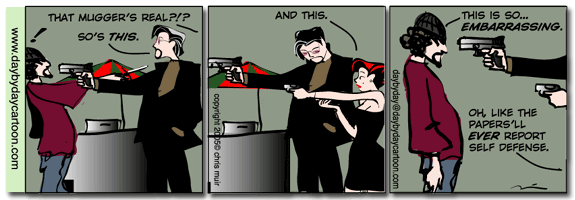
Day by Day


And the next day I get assigned as his attorney.

Around the Web

1) The next time you see a judge acting rude in a courtroom and you wonder why none of the lawyers do anything about it,read this from the Virginia Supreme Court. Now realize that the attorneys who filed the complaints will have to appear in front of that same judge over and over and over . . .

Via SWVaLaw

2) Don't buy a newspaper after the judge tells you not to and don't lie to the judge if you do. I bet the punishment ends up being a fine - maybe the typical 10 days for contempt.

3) Who cares if the prosecutor has witnesses, physical evidence and a confession? Make the prosecutor prove it.

4) Ummm . . . I must not be asking enough. The price in the quote seems dead on to me. Of course, if we're talking about a jury, an appeal, or a violent felony the price goes up but for someone who walks in charged with simple possession or larceny I'd feel a little guilty charging much more.

5) The lesson here? Don't work for a prostitute.

6) Questioning grand jurors about prejudice. Not sure the comments quoted support a racial content rather than an assumption that the people in front of the grand jury are criminals. Not that I'd be happy about the second assumption either.

7) Pity the poor white collar criminal. He might have to spend time in prison for embezzling that pension fund. He might even have to spend as much time as a low level drug dealer. And, gasp, he might even be in the same prison. Cry me a river.

22 April 2005

Evidence and the Defense Attorney

Regarding the stolen computer in yesterday's post Mark asks/comments:
About the kid with the stolen computer: What would you do if that kid walked into your office? What's your advice as an ethical practitioner of law? You can't just tell him to keep it or destroy it, can you?

If I had that computer, I'd call the professor's bluff. Literally call him on the phone and ask him, "So, if this computer is such a big deal and there are government agencies looking for it and all that, you shouldn't have any trouble telling me the serial number that's written on the bottom. And the address of the wireless card that you've been tracking....Didn't think so." Click.
Well, I wouldn't tell him to call a professor who might recognize his voice or might get police to track his phone number or get prints off the pay phone. And, as his attorney I sure as heck wouldn't make that call. My conversation with John Smith might be confidential but the fact that he's my client isn't. The police would have a pretty strong suspect if only one of the students in the class was a client of mine. I do agree it would be fun to call the prof's bluff but it just ain't worth the risk.

When this kid comes into my office I'm not sure there's much I can tell him as to what he should do with the computer. I can neither take the evidence of his guilt into my possession nor advise him to do anything illegal with it. If he asks me if he should hide it I must express no opinion. I think something along the lines of, "I can't and won't tell you what to do with the computer. I am not allowed to aid you in any future illegal act like hiding evidence."

Of course, this is a gray area if I've ever seen one. If he brings the computer to my office and then leaves with it in his possession have I aided in hiding evidence? My answer would be no; he's responsible for his own acts with an item in his possession.

But what if he asks me legal questions about his situation? Can I advise him that as the situation stands there is little evidence and a weak case against him? That if the computer is traced to him the prosecutor will have a strong case? This is the really sticky point. My client is asking me legal questions and it is my obligation to advise him as to his situation. But I'm not stupid, I have an idea what he's going to do with that information.

I think what I have to do is something along these lines. First, I tell him that I cannot help him to commit any crime and that I absolutely refuse to discuss the possibility of any future crime. Then I tell him that he has an obligation to act within the parameters of the law. Then I explain to him his legal situation. Then I shoo him out of my office.

Let him take the information and make his own decisions. Maybe he'll do the morally correct thing. I have my doubts about that (my job makes the best of people cynical) but I don't know that. He is the one who will act of his own free will.

It's not an entirely satisfying answer and I recognize that fact. A number of the things my profession requires of me are not entirely satisfying. Nevertheless, I think the answer I've given best fulfills the obligations which are part and parcel of being a defense attorney.

21 April 2005

Around the Web

1) Labour's going to cut crime 15%. Heck, they might even get votes on this side of the Atlantic if they can follow through on that.

2) A Monday in court, PD style.

3) DUI quotas? Say it ain't so . . .

4) Crime is all the parents' fault. Because we all know that teens and young folks have no free will.

5) Hey, if you flirt with public defenders it can't be used against you in court.

6) Who's guilty of what?

7) A probation hearing from a (drafted) prosecutor's point of view.

8) CSI is making people expect the prosecutor to actually provide evidence. Shocking! Absolutely shocking, I say!!

9) I forgot is not an excuse for those who don't register as sex offenders. I've had people tell me this before. I've even had people whom I believe tell me this before. It doesn't make much of a difference when you step in front of the judge.

10) A five hour interrogation just might not wash with a jury.

11) DUI road blocks don't work (and they don't; they catch the folks who wouldn't have been pulled over by an officer because they weren't driving erratically). But they'll still be used because they make MADD happy.

12) Now, this is a heck of a bluff. A little over the top though. If I was the kid the computer'd get wiped down and dumped in a lake, ocean, or sewage facility. Maybe I'd even go out in the woods and bury it. It's not like some dog or wild critter would dig up its bones and bring them where someone would see them. But I sure as heck ain't turning it in if the world is going to come down on me like that.

13) Kaplah!

Arrgggg!!!!

Blogger ate my large, inciteful, life altering post which would have finally revealed to all of you what the question is for the answer "42."

I guess ya'll will just have to keep wondering.

19 April 2005

Benedict XVI


His Holiness Pope Benedict XVI


May St. Boniface help him and the God guide him.

Sacrifices

So, I'm going to go visit a client in Alexandria. Alexandria is a part of this place up around DC which everyone in the rest of Virginia refers to as NoVa (variously translated as "not Virginia," "non-Virginians," or Northern Virginia). The rest of the Commonwealth pictures this section as the place where endless amounts of money is poured down the drain in unending highway projects that benefit no one important (only NoVans). Anyway, it's a place most sane Virginians avoid but I grew up in Kentucky so I don't know any better - and I don't seem able to learn.

I leave home before 4 p.m. I have all the directions and the jail is actually on the way to RFK stadium. If I hit the jail a little before 6 I can make the stadium at 7 and watch the Nationals. In no time at all I am burning rubber, heading North.

[note: At this point I want to thank those Yankees who travel I95 for guaranteeing that if I keep my vehicle under 80 mph no trooper is ever going to notice my slow-poking vehicle. In particular I want to thank those of ya'll from New York and New Jersey who seem to think that "Speed Limit 65" means that speeds are limited to those above 65 and that a healthy margin of error should be left so that you cannot accidentally get within 10 mph of the speed limit. And the shifting back and forth between the three lanes until there is 2" of clearance through which you can squeeze your car and zip off is simply amazingly adept driving (worthy of NASCAR even).]

Anyway, after driving for about 2 hours I hit NoVa. I start looking for my turn off onto 495E. I spot it. I try to get over. I fail. So, the next turn off I get off so I can go back. But noooo, that doesn't work. I end up going miles in the wrong direction until I try the same thing with this secondary highway (and get the same result). I find myself driving through Fairfax on a road I'm pretty sure is taking me the right direction. Then I find myself in Arlington (no, not the cemetery). I stop at a couple gas stations to try and buy a map. At the first the Indian clerk doesn't understand a word I say; at the second the Indian clerk points me right to his $40 map books (which I buy).

For the next little while I sit with that book and figure out how to get to the stadium (yes, I am male and refuse to ask directions). It's too late for the jail so I'm going straight to the stadium. It turns out I am going the right direction and all I have to do is go a little further, catch a secondary highway, cross some bridge in memorial to someone, and follow Independence in a straight line through the city to RFK. And it works until I get half way through the city, look up, and realize that without making any turns at all I'm on Pennsylvania. So I backtrack and find out that the road which is straight as an arrow in my brand new $40 map book actually makes a left turn at some point after the government buildings. Silly me, I didn't make the left turn on the straight road. Anyway, once I find Independence again it's a straight shot to the stadium.

I get parked and head up to the stadium. The lady runs the scanner over my printout (ticket by internet) and says, "Honey, your ticket is for tomorrow." What? Aw crud. She's right. I must have clicked on something wrong when I bought the ticket. However, it's too late now so I go over to the trailer where tickets are being sold. I got directions to the correct area and was looking for actual ticket booths but quickly started to think that that trailer over there with people in the windows was probably ticket sales (nobody was in line but why else would it be there). At first I think about seeing if I can exchange my ticket but after starting to talk with the lady selling tickets I decided it was not going to be worth it. The lady didn't understand what I meant when I walked up to her window and asked "Tickets?" I actually have to put some effort into getting her to understand and sell me a $15 ticket.

I get in and go up to the 500 level, shoo a guy out of my seat, and then go down and buy the obligatory hotdog and Nationals t-shirt before returning to my seat. The game is pretty good. The Nats go nuts in the 7th and win 9-3. The seats in the upper level are tiered steeply enough that you can see everything and they're close enough to enjoy the game. Of course, next time I will bring ear protection because up there you're just a little too close to the speakers. Of course, as is always true in the cheap seats half the fun is in watching the crowd. Most of the entertainment was in watching three guys running around with no shirts painted red, white, and blue (each his own color) trying to get us all to do the wave. I think it took them about 1 1/2 hours but sometime in the 8th they got it to go around the stadium 3 times. After that we just ignored them.

So the game ends and I spend the next hour trying to get a hotel room. Two hotels are right near the jail but they're both full. The only good thing about stopping at them is that I see the road the jail's on; I look down the road and, sure enough, I see institutional architecture. Finally I find a hotel further down the way and the next morning I sleep in because I know where I'm going.

But, of course, when I get there I find out that the institutional building I saw at the dead end of Mill Road is a post office and there ain't nothing else there. Over the next 45 minutes of driving I find out that there are no less than 3 (possibly 4) Mill Roads within a 2 mile radius - none of which connect. However, I finally find the "Public Safety Center" hidden behind a swank apartment complex and a fancy glass office building. At first I'm confused by the name but seeing fences everywhere and a building with very thin windows I realize that this has got to be the jail. However, when I go to check in it's 11:05 and visitation doesn't start again until later in the day. Darn. Looks like I'll have to find something to do and I just happen to have a ticket to the Nationals game. Don't throw me in that briar patch . . .

So off I go. I get a little lost again but find the stadium in plenty of time. I find one of the elusive DC caps that everybody is trying to buy; everybody in line both Saturday and Sunday was trying to buy stuff with the DC logo and settling for that silly cursive W if they couldn't. This time I'm in the 200 section down low. Unfortunately these seats aren't tiered very steeply and the guy and gal sitting in front of me are both 9' tall. I spend the game peering around them. Still, it's fun and the people down here aren't acting too silly. I guess more expensive tickets get you a certain amount of decorum. Not that this meant the people sitting around me were the greatest baseball fans. The lady in front of me was in her cups by the 5th and I heard another guy ask if the Nationals would get to bat in the 9th if they were behind. But he didn't have to worry, the Nats went nuts in the 7th and won 7-3.

The game is over by 4 p.m. so I have three hours to kill. I go to the monsterplex-mega movie theater just up the street from the jail, buy my ticket from the computer, ride the escalator up high enough to start worrying about nose bleeds, and watch Miss Congeniality 2 (a decent matinee time killer). It gets out at five 'til seven.

At 7 p.m. I arrive at the Public Safety Center just as visitation hours start. I walk around the perimeter to the gate and get buzzed through. Then I'm standing outside a small brick building. The door buzzes and I go in where there's one deputy standing there to check me in. For the life of me I can't shake the feeling I'm in an old spy movie trying to get through Checkpoint Charley. After she checks me through, she buzzes me through a door on the other side and tells me to follow the side walk. As if I had a choice. Both sides of the sidewalk have a wrought iron fence next to them and I'm funneled into the building at the end. No one is there. I turn right like I was told to and walk through a museum and reach a door with a buzzer and get buzzed in. Then I'm in a lobby with a guy in civilian clothes who's locked in a glass box. He checks my papers again and then sends me up an elevator to meet with my client. After I spend a hour or so visiting my client I go back down and the guy in the glass box buzzed me out of his area and I walked back out and down the sidewalk. This time I don't go through the little brick guardhouse because the way out is through a one way rotating iron gate and then the outer chain link fence gate. Then I drove the 2 hours back home.

Just thought I'd let you know what kind of sacrifices I go through to visit my clients . . .

If You Can't Outlaw Smoking Outright . . .

I saw this sign in a few places in Alexandria:
City Code Prohibits
the carrying of
lighted tobacco products
of any kind.
And I'm pretty sure you have to carry tobacco if you're going to smoke it.

16 April 2005

Gone to the Game

Okay, I'm off to DC to visit my client and go to the National's game. If I can remember how I'll do a little photoblogging along the way.

$1,828,930

I am worth $1,828,930.00 on HumanForSale.com

Personally, I think the price is a little steep. However, if there is a beauthiful young lady out there willing to pay the price, I might be willing to be persuaded.

Just remember my critters (2 dogs, 2 cats) are part of the package. Just think of it as proof that I love animals and chidren.


lv Blonde Justice (who is worth much more than me).

Free Henry Earl

Sadly, I've represented at least one guy in my particular county who may, over time, give this guy a run for his money. The guy is interdicted (forbidden to drink) but every time he gets out of jail his first stop is the liquor store and then he ends up right back in jail. The last time I represented him he was thrown in jail when the police found him drunk outside a doggy day care place barking back and forth with the dogs.

But at least the guy has enough sense not to drive a car. You can see him riding his bicycle around the county on the days he's out.

Gun Control

So what happens when the county attorney in a rural county proposes stricter firearm control?
"Can't we just say no?" Supervisor Russell Holland asked his fellow supervisors, most of whom looked at [the county attorney's] memorandum with weary disdain.
It seems that they are going to appoint a committee to study the matter (undoubtedly before they dump it).

from the Powhatan Today (although not in its online version).

15 April 2005

Off Point: Baseball

Take me out to the ball game . . .

So, I have to drive up to Northern Virginia tomorrow to visit a client in jail in Alexandria. In general, driving anywhere near DC is a pain but I hope things won't be too bad on a Saturday.

Anyway, since I'm required to head in that direction I decided I'd go to watch the Nationals play. I'm really happy to have a big league team within a couple hours. Prior to this I could go to watch the Richmond Braves (and I still plan to do this) but I suspect I shan't be able to do this much longer since the idiots in Richmond seem determined to drive the Braves out. And of course, I guess I could have driven a little further north in order to watch some team from the lesser league which I understand is up there (there are rumors that some team is up there which doesn't allow it's pitchers to bat).

Now, if we could just get a local channel to carry the games. The only pro team we get are the Atlanta Braves on radio.