I drove down to Virginia Beach today in order to attend the Virginia State Bar's annual conference. Basically, it has two days of CLE's and I haven't done any yet this year so this was a good way to catch up. There are other events as well, but I'm just not all that political so the main thrust of the event as far as I'm concerned is the continuing legal education.
It's a good thing I'm not here for the warm weather and beautiful ocean. The remnants of a tropical storm/depression swept thru the area today and it's wet and when the breeze blows (constantly) it's rather cool. Maybe it'll get better tomorrow.
Not a single person with whom I regularly practice is coming to this. Most of them dismissed it as "a biglaw thing." Maybe they're right. When I pulled up in the parking lot I walked past a group of about 10 people in suits, ties, the whole nine yards. They hadn't even loosened their ties. It was a bunch of lawyers and they were getting a "limo" (when did vans become limos?) so they could go some bar. These were not the working lawyers whom I'm in court with every day - even the most uptight of us at least loosens the tie. I almost felt self conscious in my kinda tattered khakis, rugby jersey, and beat up old baseball cap - almost.

14 June 2006
Lawyer Speaks Out
After the two Mob-Cops were convicted in NYC they hired new lawyers. Nothing new there. The new lawyers try to get a new trial. Nothing new there. The new lawyers list every possible error, real or imagined, which the old lawyers committed. Nothing new there.
The old lawyers responding, now that's interesting:
The old lawyers responding, now that's interesting:
"I was just so personally offended," Cutler said. "One day you’re begged to come in, and the next day you’re knocked by the client, who to me is delusional in a certain respect. He’s certainly ungrateful and shameless."Maybe I should have titled this, "Things I Have Wished I Could Say but Worried the Virginia Bar Would Sanction Me For."
. . .
"He’s desperate — who else can he attack?" Hayes said. "I am surprised, however, since I didn’t think he was like that."
"They started off blaming the government and the prosecutors, blaming this and that," Cutler said. "Who’s left? Us. I am rankled and angry."
. . .
"I don’t want to hurt Lou, and I certainly don’t want to hurt Steve," Cutler said. "But I will be heard."
Open and Shut
If you send someone a text message, "I feel bad, sorry I raped you", there's not much reason to have the trial.
Who Needs the 4th Amendment?
It's just so darn inconvenient when police actually have to get a warrant. It takes time, you have to show probable cause . . . Life would just be that much easier if we just let the police get all the stuff they want whenever they want it.
DeathLaw in New York
The NY Senate appears to have passed a death penalty statute but the Assembly killed it in committee.
Unlucky Number 13
I can't really say I'm surprised to hear of an illegal immigrant with 13 aliases. The use of multiple names is common enough that around here the person you go and talk to if you need to figure out the actual name of a client with a page and half of aliases you go talk to the Spanish speaking lawyers.
6th Circuit - No Need to Research Family in Death Case
As I understand it, in most death penalty cases it is standard practice to research the defendant's family in order to establish events in his life, medical conditions, etc. which might mitigate the sentence.
What happens when the attorney doesn't take this step and his client is sentenced to death? According to a divided 6th Circuit panel, nothing.
What happens when the attorney doesn't take this step and his client is sentenced to death? According to a divided 6th Circuit panel, nothing.
Yeesh
I just can't picture any police force down here in Virginia publishing this statement:
The New York State Court of Appeals has done the people of New York City a great service by permanently removing Laura Blackburne, a notorious cop-hater, from the Queens Supreme Court bench.Can't she just run and get elected again?
The Difference Between US and British Police
An officer shoots a terrorist suspect during a raid. Later, the suspect demands an apology. The Metropolitan London police apologize.
Federal Marijuana
It looks like the feds may be growing their own stash - at the federal courthouse.
How many of my clients would get away with the excuse that marijuana just happened to be in the filler dirt they bought? It's a pretty weak excuse.
How many of my clients would get away with the excuse that marijuana just happened to be in the filler dirt they bought? It's a pretty weak excuse.
13 June 2006
Pink Prosecutors
OMG! I just walked into the newly refurbished waiting room for the
office of the prosecutor and it has brand new pink wallpaper.
11 June 2006
A College Girl in Jail
A video of a white college kid getting the full on troublemaker treatment at jail. The trouble is, she is the prosecutor's daughter.
I got this link from another blog but can't remember who. Sorry. Drop me a line and I'll give you credit.
I got this link from another blog but can't remember who. Sorry. Drop me a line and I'll give you credit.
Blonde Justice Violates Freedom of Speech
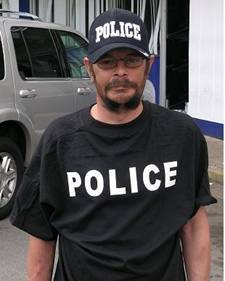
The joys of our work:
YOU CALL YOURSELF A LAWYER? YOU'RE VIOLATING MY FREEDOM OF SPEECH! I GOT FREEDOM OF SPEECH! THAT MEANS I CAN TALK TO YOU AT YOUR OFFICE IF I WANT, I DON'T HAVE TO TALK TO YOU ON THE PHONE!Mighty nice of the witness to explain that nuance of constitutional law.
10 June 2006
Off Point: Cars
I usually treat myself to one movie a week. So far, this has been a sparse movie Summer and, judging from the truly awful artwork (some people should be kept away from computers) and plot summaries I've seen of Superman Returns, it ain't gonna get better. X-3 had plenty of special effects and a "plot" which, well, wasn't. The other big opening was a movie wasn't a revival of a gnostic heresy. Honestly. For real. C'mon, it's fiction - it can't possibly cause people to get interested in ideas which Christianity rejected as pure fiction, oh say, almost as soon as they were promulgated - long before Saint Boniface convinced my forefathers that they should be Christians. I went to see Over the Hedge that weekend. There was Poseidon, which I figure might be worth watching when it hits cable (for some reason I think I might know how it turns out). This week was The Omen. No thank you. I went to see Cars.
It was actually pretty good. Mind you, the storyline is canned: jaded big-city guy gets trapped in small town against his will and becomes a better person for it. Think Doc Hollywood. Still, the story is fun and, oh yeah, all the characters are cars. And the race scenes are dead-on hilarious. If you are part of a NASCAR family pack up the rugrats, grab the overworked spouse and head to the movies. There are even rubber balls on the track. If you're not a NASCAR family pack up the rugrats, grab the overworked spouse and head to the movies - I'm not a NASCAR guy (where I grew up racing involved horses) and I was rolling. Be aware, as an adult the parts of the movie you'll laugh at might not be the same as your kids. But everybody will enjoy it.
It was actually pretty good. Mind you, the storyline is canned: jaded big-city guy gets trapped in small town against his will and becomes a better person for it. Think Doc Hollywood. Still, the story is fun and, oh yeah, all the characters are cars. And the race scenes are dead-on hilarious. If you are part of a NASCAR family pack up the rugrats, grab the overworked spouse and head to the movies. There are even rubber balls on the track. If you're not a NASCAR family pack up the rugrats, grab the overworked spouse and head to the movies - I'm not a NASCAR guy (where I grew up racing involved horses) and I was rolling. Be aware, as an adult the parts of the movie you'll laugh at might not be the same as your kids. But everybody will enjoy it.
09 June 2006
Second dancer told police Duke rape charges were "a crock"
According to police, the other dancer in the Duke lacrosse case told them early in the investigation that allegations of rape were a "crock" and that she was with the accuser the entire evening except for a period of less than five minutes.
08 June 2006
Virginia's First Elected Blogger is Hiring
Title: DEPUTY COMMONWEALTH’S ATTORNEY
Firm: The Wise County/City of Norton Commonwealth’s Attorney’s office
Date Posted: 06/02/06
The Wise County/City of Norton Commonwealth’s Attorney’s office has one opening for a Deputy Commonwealth’s Attorney. Must be a member of the Virginia State Bar. Criminal prosecution or defense work is desired, but not a requirement. Responsibilities include extensive trial work in all courts in the prosecution of felony and misdemeanor cases. Send resume to Commonwealth’s Attorney, P.O. Box 69, Wise, VA 24293. Deadline for receipt of resumes is June 30, 2006. EOE.
I've seen Wise and it's beautiful country. Ya'll could do worse.
Firm: The Wise County/City of Norton Commonwealth’s Attorney’s office
Date Posted: 06/02/06
The Wise County/City of Norton Commonwealth’s Attorney’s office has one opening for a Deputy Commonwealth’s Attorney. Must be a member of the Virginia State Bar. Criminal prosecution or defense work is desired, but not a requirement. Responsibilities include extensive trial work in all courts in the prosecution of felony and misdemeanor cases. Send resume to Commonwealth’s Attorney, P.O. Box 69, Wise, VA 24293. Deadline for receipt of resumes is June 30, 2006. EOE.
I've seen Wise and it's beautiful country. Ya'll could do worse.
Ken Want!

Unfortunately, the New Zealand company which made this whiskey went out of business about 9 years ago. Of course, if anybody has some and wants to make a donation I'll be forever grateful.
Rich White Kid Syndrome
I'm driving to my office from the courthouse yesterday when I hear the local talk radio guy ranting about the latest item which he is just stunned an outraged about. It's something called intermittent explosive disorder (IED). I don't pay too much attention to it, it's just something silly he's found a rant about. Then I get home and I find the same topic on Dvorak.com. Apparently, according to some researcher, 16 million Americans just randomly become violent without provocation. Anyone wanna take bets on whether I'll be able to use this in court?
Actually, this reminds me a lot of oppositional defiant disorder (ODD). ODD is a disorder found in teenagers and is described as having the following symptoms:
One day, as I was sitting juvenile domestic relations court, another defense attorney leaned over to me and described this as "rich white kid syndrome." What he was talking about is the fact that the only people that seem to get diagnosed with this are kids who belong to upper-middle-class families and above. These kids get in trouble and their parents go out and hire a psychiatrist who diagnoses them with ODD. However, if you are a poor kid from the trailer park or from the slum apartments when you get in trouble you're just a bad kid. Nobody steps up with a diagnosis which calls being a bad kid a disorder.
Actually, this reminds me a lot of oppositional defiant disorder (ODD). ODD is a disorder found in teenagers and is described as having the following symptoms:
A pattern of negativistic, hostile, and defiant behavior lasting at least six months during which four or more of the following are present:Of course, since this pretty much describes being a teenager I'm not really sure if any of us went thru our teenage years without suffering from ODD.
1. Often loses temper
2. often argues with adults
3. often actively defies or refuses to comply with adults' requests or rules
4. often deliberately annoys people
5. often blames others for his or her mistakes or misbehavior
6. is often touchy or easily annoyed by others
7. is often angry and resentful
8. is often spiteful and vindictive
The disturbance in behavior causes clinically significant impairment in social, academic, or occupational functioning.
One day, as I was sitting juvenile domestic relations court, another defense attorney leaned over to me and described this as "rich white kid syndrome." What he was talking about is the fact that the only people that seem to get diagnosed with this are kids who belong to upper-middle-class families and above. These kids get in trouble and their parents go out and hire a psychiatrist who diagnoses them with ODD. However, if you are a poor kid from the trailer park or from the slum apartments when you get in trouble you're just a bad kid. Nobody steps up with a diagnosis which calls being a bad kid a disorder.
07 June 2006
Tasers for New Zealand?
In New Zealand they're debating whether or not to introduce tasers as a law enforcement tool. Personally, I'm not sold on tasers as a law enforcement tool.
It's not that I don't think they can play a valuable role in ensuring officer safety, I question the role they are being placed in. The way I believe tasers should be used are as substitutes for firearms. Now I realize that when a bank robber comes out of the bank a taser is not going to do the same job as a shotgun. Rather, it's for the confrontation where a suspect or a green warrant is standing there with a knife in the officer's only previous option would have been to use his firearm.
The problem is that I don't think this is how officers are being trained to use them. From a couple of conversations I've had, officers seem to be getting trained to use tasers in situations where previously they would have laid hands upon the individual or cap - stunned him.
Anecdotal evidence of fatalities due to the use of tasers continue to make its way around. While I'm sure there's some truth to these, I'm not sure if the death toll is as high as some articles claim. I also lack a marker to compare it against. If you tell me that 150 people over the last five years in the entire United States were killed by police officers using tasers you must give me something to compare it against. How many fatalities have there been in the use of the various types of maces? How many fatalities from the laying on of hands on other physical force? Give me something to compare.
In any case, it appears that tasers have the potential of being deadly force for certain individuals. This leads to the conclusion that they should not be a step up from or substitution for physical contact, they should be a step down from the clearly deadly force of a firearm.
Mind you, I've yet to have a case where an officer has actually used a taser. It's something that still slowly making its way into the system and I suspect the anecdotal evidence of multiple deaths may be causing some officers to be cautious in the use of this item. After all nobody wants to be sued because he jumped the gun and used a taser at a typical traffic stop when there is no call for it.
It's not that I don't think they can play a valuable role in ensuring officer safety, I question the role they are being placed in. The way I believe tasers should be used are as substitutes for firearms. Now I realize that when a bank robber comes out of the bank a taser is not going to do the same job as a shotgun. Rather, it's for the confrontation where a suspect or a green warrant is standing there with a knife in the officer's only previous option would have been to use his firearm.
The problem is that I don't think this is how officers are being trained to use them. From a couple of conversations I've had, officers seem to be getting trained to use tasers in situations where previously they would have laid hands upon the individual or cap - stunned him.
Anecdotal evidence of fatalities due to the use of tasers continue to make its way around. While I'm sure there's some truth to these, I'm not sure if the death toll is as high as some articles claim. I also lack a marker to compare it against. If you tell me that 150 people over the last five years in the entire United States were killed by police officers using tasers you must give me something to compare it against. How many fatalities have there been in the use of the various types of maces? How many fatalities from the laying on of hands on other physical force? Give me something to compare.
In any case, it appears that tasers have the potential of being deadly force for certain individuals. This leads to the conclusion that they should not be a step up from or substitution for physical contact, they should be a step down from the clearly deadly force of a firearm.
Mind you, I've yet to have a case where an officer has actually used a taser. It's something that still slowly making its way into the system and I suspect the anecdotal evidence of multiple deaths may be causing some officers to be cautious in the use of this item. After all nobody wants to be sued because he jumped the gun and used a taser at a typical traffic stop when there is no call for it.
06 June 2006
Defendant Gets Paid for Going to Court
According to Skelly, if your defense is self-defense in Washington (the state) and you win you get paid.
Today's CrimNews
1) The ACLU is suing Alaska over its law restricting the personal use of marijuana.
2) Paroled after DNA testing eliminates him as the rapist, a Virginian fights for a pardon.
3) Police who worked as Mob hitmen likely to get life.
4) It appears that Dillon's Rule doesn't exist in Colorado. At least not where gun bans are concerned.
5) A 17 year old British girl's plan to rob and kill an elderly lady is found while she is in juvy, yet it still happens.
6) I bet they never thought they'd actually find a CSI situation when they took that CSI class.
7) Prison crowding isn't unconstitutional.
8) Apparently, slave traders have set up shop in UK airports.
9) Worried about kids cheating in school? So is China. That's why it's sending them to jail.
2) Paroled after DNA testing eliminates him as the rapist, a Virginian fights for a pardon.
3) Police who worked as Mob hitmen likely to get life.
4) It appears that Dillon's Rule doesn't exist in Colorado. At least not where gun bans are concerned.
5) A 17 year old British girl's plan to rob and kill an elderly lady is found while she is in juvy, yet it still happens.
6) I bet they never thought they'd actually find a CSI situation when they took that CSI class.
7) Prison crowding isn't unconstitutional.
8) Apparently, slave traders have set up shop in UK airports.
9) Worried about kids cheating in school? So is China. That's why it's sending them to jail.
05 June 2006
History of a Trial
03 July 2005: A young man by the name of John Smith is brought before the General District Court of Pitcairn County. He's an 18 year old ward at Lost Hope Juvenile Detention Facility, which is the place where Virginia sends people under the age of 18 whom it has given up on and keeps them until they are 21 or commit a felony inside. He's before the court because he is charged with two misdemeanor assault and batteries. This means he is accused of either assaulting another juvenile ward or he has committed a minor assault upon a guard. His court date is set for the 13th of October 2005 and since I'm sitting in the courtroom the judge assigns me to take the case. Before I can speak to him he is hustled out of the courtroom, put in the van, and shipped back to Lost Hope. Before I leave the courthouse, the judge calls me back to the bench and tells me that the date they've given me is incorrect, the client's court date is actually the 12th of October 2005.
So I have to arrange to go visit him at the juvenile detention facility (as well as about four other people I'm representing at Lost Hope). Lost Hope isn't as hard to get into some of the prisons I go to, but you still have to give notice a day ahead of time and it's at least a 45 minute drive from my office and further then that by at least half an hour from the courthouses I'm usually in. I have some trouble arranging for a visit during the day because, believe it or not, that's what I had to be in court. Thankfully Lost Hope has visits at night and that's when I end up doing. First I tell the young man his actual court date. Then, we talked for about 10 to 15 minutes, and I left not too terribly concerned over the charges.
24 August 2005: Young Mr. Smith is back before the General District Court of Pitcairn County. This time he's charged with knowingly and willfully injuring a guard -- a class five felony carrying up to ten years in prison. I'm not in court at the time but because I represent him on the other charges I am assigned to represent him on this charge. Therefore, the preliminary hearing for this case is set for the 12th of October 2005. I make plans to go out and see him at Lost Hope. However, before I can get out there Mr. Smith makes one more trip to the General District Court and I'm assigned to represent him in another case.
15 September 2005: Mr. Smith is brought yet again to the Pitcairn General District Court. He has received another charge of knowingly and willfully injuring a guard (class five felony). I am assigned to represent him on this charge as well. However, this preliminary is set for the 23rd of October 2005. I travel out to Lost Hope one more time and discuss the serious charges of which Mr. Smith has been the recipient. We spent some time talking and when I leave I have marching orders.
12 October 2005: Well, I'm in court and Mr. Smith has been brought from the juvenile detention facility. However, none of the prosecutor's witnesses are in court. The prosecutor moves for continuance and I object. However, the prosecutor gets a continuance until 23rd because we're all coming back to court then anyway.
23 October 2005: Only one of the prosecutor's witnesses shows up for court. The prosecutor can probably get a continuance for the felony witness who hasn't shown up because this is a first calling for that case. So the prosecutor agrees to drop the two misdemeanors and not bring them back as direct indictments as well as dropping one of the felonies to a misdemeanor assault and battery if Mr. Smith will plead guilty to it and take 12 months with six months suspended. Mr. Smith jumps at this deal. However, the witness who was supposed to be there for the felony preliminary hearing on the 12th of October has shown up this time so we have a preliminary hearing in that matter.
Officer Vincent is called by the prosecutor and testifies that Mr. Smith was pressing a call button in his pod and that when she went to stop him he grabbed her on the face, palming it like a basketball, and shoved her down. She then stated that he kicked her four or five times in the upper leg before being pulled away by a couple of other wards. The injuries she sustained were a strained back and a bruise. There was never any real doubt as to whether or not this would be certified to the grand jury and it was.
20 December 2005: This is both the day when the prosecutor takes his ham sandwiches to the grand jury and cases are docketed. Mr. Smith's case is set for the 18th of January 2006 and through dint of earnest effort the prosecutor manages to somehow miraculously get Mr. Smith indicted.
I try to go visit Mr. Smith out at Lost Hope, but I find out that he has been moved into the adult system. The people at the juvenile detention facility don't seem to know where he is, but they do know that he's been moved into the adult system. When I ask why, one of the guards opines that was probably because the last time he went to court the judge asked him why he was in Lost Hope; he told the judge that he was in Lost Hope because the last time he was in juvenile court he threw a clip board at the judge. The guard tells me that the very next day after he told this to the judge Mr. Smith was moved to the adult system.
Anyway, I have to track down where Mr.Smith is myself. Luckily, the Department of Corrections has a web site where it tells you where all the inmates are located. Unfortunately, Mr. Smith apparently hasn't been in the adult system long enough for me to find him in that way. So I wait a week and, sure enough, he pops up on the system. He's even in the same county; they just moved him down to the classification section of Pitcairn Correctional Facility.
So I jump through all the hoops and go to Pitcairn Correctional Facility, which (much like Lost Hope) is about 45 minutes from my office; however, it is more difficult to set up an appointment at Pitcairn Correctional because all visitation ends at 3 p.m. Because of a screw up, I go to the wrong part of the prison first (general population) and spend about 45 minutes there until they figure out I'm in the wrong place. I then drive around to the other side of the prison. Technically, when I get there I am too late to get in the visit Mr. Smith but they know about the screwup and bend the rules to get me in. The visit doesn't last all that long, it's pretty much just to confirm what I have spoken to Mr. Smith about before. I always try to meet with the clients before the trial date even if they have told me they are going to plead guilty because sometimes they change their minds. I also go over the questions I expect the judge to ask them. Before accepting a plea, judges in Virginia ask questions to determine whether guilty or not guilty pleas are voluntary and the defendant understands the consequences of his actions. I prefer to go over these with the client just before we walk into the courtroom because they forget or become antsy about their answers; however, in Pitcairn County I rarely have the opportunity to do this because clients tend to be delivered late to court, I usually have a number of cases, and the judge has my cases called one after another.
18 January 2006: I'm in court but somebody forgot to tell the circuit court clerk's office that Mr. Smith had been shipped from Last Hope Juvenile to Pitcairn Correctional Facility. Consequently, the case gets carried to the next docket call to set a new date when they can get him to court. As required by the speedy trial statue I note Mr. Smith's objection to the continuance. Yes, I know that it's silly for me to object to a continuance which is not in any way attributable to Mr. Smith, but the courts will use any technicality they can to get around the purpose and spirit of this statute. So I object.
13 February 2006: Docket call. Client's court date is set for 19 March 2006.
16 March 2006: I go back to Pitcairn Correctional Facility in touch base with Mr. Smith again about where we stand.
19 March 2006: This time they get Mr. Smith to the courthouse. Of course, they get him there so late that I did speak with him all of a minute before we go into the courtroom. We start the process. The clerk of the court stands up and reads the charge to Mr. Smith: "John Smith, you are hereby charged that you did, in the County of Pitcairn, against the peace and dignity of the Commonwealth of Virginia, assault and batter Mary Vincent, an employee of Lost Hope Juvenile Detention Center, with a knowing and willful intent to injure the same. How do you plead, guilty or not guilty?" "Guilty."
Then the judge starts to lead Mr. Smith through a series of questions. "Has anyone promised you anything to plead guilty today?" "No." "Has anyone threatened you or coerced you to force you to plead guilty today?" "No." "Do you know what the maximum sentence you're facing is?" At this point Mr. Smith starts to falter. He looks at me, so I prompt him and he answers "10 years."
"Mr. Smith, how much time as Mr. Lammers spent with you discussing your case?" "About 15 minutes." The judge fixes his gaze upon me, "Mr. Lammers, is that an accurate representation of how much time is spent talking to your client?" "Your Honor, I think it was more like an hour. There hasn't been much of a question of what was going to be done in this case." Then the judge asks him what his sentencing guidelines show. "I don't know." The judge looks suspiciously at me. "Has your attorney explained sentencing guidelines to you?" "No." At this point I'm doing what I normally do in this situation, I have chosen a point to stare at on the far wall and I'm chewing on my tongue. So the judge turns to me. "Mr. Lammers, have you discussed the sentencing guidelines with your client?" "Your Honor, I know that question is coming in this courtroom so I make a practice of discussing the guidelines with each of my clients." "Did you discuss those specifically with Mr. Smith?" "Your Honor, I remember discussing the guidelines with him, but I must admit I don't have a note my file saying that I gave him his specific guideline range." And to be honest, at that moment I can't remember whether I did or not. "Mr. Lammers, this court is going to be in recess for 10 minutes. During that time the probation officer is going to do the guidelines and you're going to take them to your client."
The judge leaves the bench and Mr. Smith is taken to the lockup area. I huddle with the probation officer and we figure out that Mr. Smith's guidelines are between six months and one year, with a midpoint of nine months. I go to the lockup area to tell Mr. Smith. He's not actually downstairs in the cages; they have him in a witness waiting room next to the court room along with DOC guards. Before I can even tell him his guideline range he blurts out, in front of God and everyone, that he's now going to plead not guilty for a reason having nothing to do with the guidelines. The guards are sitting there with looks somewhere between snickering, pity, and bemusement. Mr. Smith and I have a brief and rather intense discussion. However, he has made his decision and he is going to plead not guilty and take a jury trial.
We go back in the court room. "Your Honor, at this time my client would like to change his plea from guilty to not guilty." The judge looks at me like I am an absolute loser. He has the clerk re-arraign Mr. Smith. After Mr. Smith says that he's going to plead not guilty and take a jury the judge continues the case to the next docket call because there are no jurors available.
On the way back to my office I remember with crystal clarity the discussion I couldn't remember when I was speaking with the judge. I spend the rest of the day kicking myself because maybe if I'd remembered it clearly Mr. Smith wouldn't be taking a jury trial in a very conservative jurisdiction where, if he's found guilty, the jury is likely to sentence him to at least five times the amount of incarceration he would've gotten otherwise -- if they don't give him the maximum.
14 April 2006: Yet another docket call date. This time Mr. Smith's court date is set for the 28th of May, 2006.
23 - 25 April 2006: I have my secretary call the prison and set up an appointment for me to visit Mr. Smith. She spends a couple of days playing phone tag with the prison but eventually gets an appointment set up for the 27th.
27 April 2006: I'm actually in Shire County courthouse that day and I leave it to drive directly to Pitcairn Correctional Facility. The drive takes about 1 hour and 20 minutes. I drive around to the processing center, take everything out of my pockets except my wallet (without money), my keys, a couple pens, and Mr. Smith's file. I walk up to the gate and take my ID out of my wallet. The guard tells me I have take my wallet back to the car. By the time I get back from my car the guard has figured out that Mr. Smith was moved that very morning to Nehwon Correctional Facility, which is three hours in the other direction. Of course, nobody bothered to call until my office or me. Thankfully, it's only a 45 minute drive back to my office.
OK, so now, from my office it's going to be about a 2 hour drive to visit Mr. Smith and prepare him for the jury trial. Like most prisons, Nehwon Correctional Facility doesn't allow any visits after 3 p.m. I set up one visit but have to scratch it because a court schedules me for a trial and there's no way I can get to Nehwon Correctional before 3 p.m. So I set up another meeting which will be early enough in the morning so that I can hopefully get back in time for my afternoon cases.
15 May 2006: I get up, jump in my car, and drive down to Nehwon Correctional Facility. It's not a terrible drive - just a long one. I travel so far to the southwest that I'm pretty sure at one point I must have gone into North Carolina (wait, was that Asheville?). Anyway, I finally get there at around 10 a.m. We talk for two hours and I leave about 12:15. I call everybody by under the sun let them know I'm going to be late for court in the afternoon, eat that wonderful lunch of crackers, bottled water, and fig bars (which I buy at the local gas station) on the way back, and only arrive 40 minutes late for court.
The Weekend Before: Saturday I spend a good portion of the day finding and printing out the cases which I intend to use to support my arguments in the courtroom. By the time I'm done I've printed out six cases in triplicate (one for me; one for the judge; one for the prosecutor). I also finalize my opening argument and practice it a couple of times.
Sunday I spend a good portion of the day prepping up my voir dire questions and putting together the various jury instructions I might need. I also make a trip to the local Wal-Mart and spend an hour buying Mr. Smith a decent shirt, a good pair of pants, black socks, and a pair of shoes. I do this because the Supreme Court of Virginia decided sometime in the last year or so that it is per se ineffective assistance of counsel to allow your client to go to a jury trial in prison garb. Of course, the Supreme Court didn't say who was supposed to give the client clothing, but I suspect that the prison, prosecutor, and Judge are not going to have clothing for Mr. Smith. After I finish this I go home and work some more on jury instructions until my home printer runs out of paper somewhere around 11:30 p.m. I finish typing out the last couple of jury instructions but save them on my USB thumb drive so that I can go into work early the next morning and print them out.
28 May 2006: I get up early and go into the office so that I can print out the last couple of jury instructions. Then I leave early for the courthouse. I get there over half an hour early; of course, none of my clients are there yet. I leave the lockup area and about 10 minutes later my one client coming from off the street shows up. I talk to him for a while and then I go back to lock up area. My two clients in lockup have finally been delivered. I speak to both of them about their cases and explain to Mr. Smith that I have brought him clothes in the sizes he requested. I walk around down in lockup area and in the sheriff's area next to it trying to find someone to give the clothes to but there's no one there. Eventually I give up and go back up to the courtroom, where court has begun.
Immediately after the case before the judge ends, the judge calls me up and asks where I was at nine o'clock when court began. I tell them I was down speaking with my clients and he fusses at me for not being in the court room at nine o'clock when he started court. Then we try my first case. After that case the judge asks me if everything is prepared for the jury trial. When I tell him that I wasn't able to give Mr. Smith his clothes the judge orders the deputy in the court room to make sure Mr. Smith gets them. Then we try and my second case of the day. When that's finished the judge has a couple of civil cases he needs to call before Mr. Smith's jury trial begins.
I run down the lockup to see Mr. Smith. He's in the civilian clothes, but they have put him back in full shackles. His legs are shackled. His hands are cuffed. He has a chain around his waist to which the handcuffs are attached and a chain attaching his leg shackles to the chain around his waist. So I know what my first motion is going to be when we see the inside the courtroom because if it is per se ineffective assistance of counsel to allow Mr. Smith to be tried in prison garb because it's indicative of guilt I'm pretty sure that the chains are indicative of guilt as well. After we discuss things for a few minutes I head back up to the court room. The first civil case has just ended. Then starts a lengthy argument about quieting title to some realty in the county.
After about five minutes of this titillating subject I step back outside the court room where I see the chief prosecutor. He tells me that he doesn't think Mr. Smith's case is going to be tried today because their witness isn't here. He has sent the state trooper who investigated this case to call the witness. Then, as we are standing there the state trooper comes back with a pained look on his face. He has called the witness and she told him that her car was broken down and she wasn't coming to court unless he came to get her and also drove her kid to childcare.
About 20 minutes later the realty case ends. The judge takes a 10 minute break and I walk up to the assistant prosecutor who is actually trying the case. No one has told him that his witnesses is missing. So it falls to me and the trooper to tell him. After he digests this for a moment he offers to drop the charge to a misdemeanor with a sentence of six months, if he can convince the judge to waive his policy of no plea deals once a defendant has demanded his right to a jury. His other option is to nolle prosequi the case and reindict. I know how the second option works. They will recharge Mr. Smith with the same offense. Meanwhile, they will charge the guard with failing to appear in court. Her trial be scheduled after Mr. Smith's trial to make sure that she actually appears in court. After she has testified against Mr. Smith her charge will be dropped as long as the prosecutor is satisfied. I've never seen a person brought to court under those circumstances who didn't testify the way the prosecutor wanted her to.
So I go back to lock up again and discuss the offer with Mr. Smith. He's tickled pink and happily agrees to take the deal. So 10 minutes later we are in court in front of the judge.
The prosecutor explains to the judge that he realizes the jurors are already here but he can't go forward with his case today. His witness isn't here and he can't continue the case because of speedy trial concerns. He tells the judge that he realizes that it's contrary to his policy but the prosecution wants to do a plea bargain - misdemeanor assault and battery with six months in jail - because its other option is to drop the case.
The judge asks where the witness lives. The prosecutor tells him that the subpoena was served at Lost Hope Juvenile Correctional Facility and that he has an address for the witness which is somewhere in Richmond but he's not sure if it's accurate.
Judge: "You're sure that you don't want to send a cab to pick her up and bring her to court? Or maybe you can send the trooper to go get her?" For a second I thought he would ask the prosecutor to mobilize the National Guard. However, the prosecutor stands gamely in the crosshairs and tells the judge again that he doesn't think he has the right address and doubts the witness would be there anyway.
The judge still looks unconvinced. He asks Mr. Smith how much of an education he has. "GED." He asks Mr. Smith what he's been doing to improve himself. "I'm taking carpentry classes at the prison so I can get a job when I get out." He asks Mr. Smith where he plans to live when he finally gets out. "With my mother." He asks Mr. Smith how he got himself in deep enough trouble that he ended up at Lost Hope. "I fell in with the wrong crowd."
Judge: "What did you say?"
Mr. Smith: "I fell in with the wrong crowd."
Judge: "Did you say you start using crack?"
Me: "No! Your Honor, he said he fell in with the wrong crowd."
Mr. Smith: "Yes Sir. The wrong crowd Sir."
Judge: "Oh, okay."
At this point the judge decides he's going to allow the deal. He lectures Mr. Smith about taking advantage of the break he is getting today. Then he allows the prosecutor to amend the felony to a misdemeanor and sentences Mr. Smith to six months in jail. I go down to lock up with Mr. Smith, get the civilian clothes back, and make sure he understood everything that happened in the court room.
And thus ends another thrilling courtroom saga.
So I have to arrange to go visit him at the juvenile detention facility (as well as about four other people I'm representing at Lost Hope). Lost Hope isn't as hard to get into some of the prisons I go to, but you still have to give notice a day ahead of time and it's at least a 45 minute drive from my office and further then that by at least half an hour from the courthouses I'm usually in. I have some trouble arranging for a visit during the day because, believe it or not, that's what I had to be in court. Thankfully Lost Hope has visits at night and that's when I end up doing. First I tell the young man his actual court date. Then, we talked for about 10 to 15 minutes, and I left not too terribly concerned over the charges.
24 August 2005: Young Mr. Smith is back before the General District Court of Pitcairn County. This time he's charged with knowingly and willfully injuring a guard -- a class five felony carrying up to ten years in prison. I'm not in court at the time but because I represent him on the other charges I am assigned to represent him on this charge. Therefore, the preliminary hearing for this case is set for the 12th of October 2005. I make plans to go out and see him at Lost Hope. However, before I can get out there Mr. Smith makes one more trip to the General District Court and I'm assigned to represent him in another case.
15 September 2005: Mr. Smith is brought yet again to the Pitcairn General District Court. He has received another charge of knowingly and willfully injuring a guard (class five felony). I am assigned to represent him on this charge as well. However, this preliminary is set for the 23rd of October 2005. I travel out to Lost Hope one more time and discuss the serious charges of which Mr. Smith has been the recipient. We spent some time talking and when I leave I have marching orders.
12 October 2005: Well, I'm in court and Mr. Smith has been brought from the juvenile detention facility. However, none of the prosecutor's witnesses are in court. The prosecutor moves for continuance and I object. However, the prosecutor gets a continuance until 23rd because we're all coming back to court then anyway.
23 October 2005: Only one of the prosecutor's witnesses shows up for court. The prosecutor can probably get a continuance for the felony witness who hasn't shown up because this is a first calling for that case. So the prosecutor agrees to drop the two misdemeanors and not bring them back as direct indictments as well as dropping one of the felonies to a misdemeanor assault and battery if Mr. Smith will plead guilty to it and take 12 months with six months suspended. Mr. Smith jumps at this deal. However, the witness who was supposed to be there for the felony preliminary hearing on the 12th of October has shown up this time so we have a preliminary hearing in that matter.
Officer Vincent is called by the prosecutor and testifies that Mr. Smith was pressing a call button in his pod and that when she went to stop him he grabbed her on the face, palming it like a basketball, and shoved her down. She then stated that he kicked her four or five times in the upper leg before being pulled away by a couple of other wards. The injuries she sustained were a strained back and a bruise. There was never any real doubt as to whether or not this would be certified to the grand jury and it was.
20 December 2005: This is both the day when the prosecutor takes his ham sandwiches to the grand jury and cases are docketed. Mr. Smith's case is set for the 18th of January 2006 and through dint of earnest effort the prosecutor manages to somehow miraculously get Mr. Smith indicted.
I try to go visit Mr. Smith out at Lost Hope, but I find out that he has been moved into the adult system. The people at the juvenile detention facility don't seem to know where he is, but they do know that he's been moved into the adult system. When I ask why, one of the guards opines that was probably because the last time he went to court the judge asked him why he was in Lost Hope; he told the judge that he was in Lost Hope because the last time he was in juvenile court he threw a clip board at the judge. The guard tells me that the very next day after he told this to the judge Mr. Smith was moved to the adult system.
Anyway, I have to track down where Mr.Smith is myself. Luckily, the Department of Corrections has a web site where it tells you where all the inmates are located. Unfortunately, Mr. Smith apparently hasn't been in the adult system long enough for me to find him in that way. So I wait a week and, sure enough, he pops up on the system. He's even in the same county; they just moved him down to the classification section of Pitcairn Correctional Facility.
So I jump through all the hoops and go to Pitcairn Correctional Facility, which (much like Lost Hope) is about 45 minutes from my office; however, it is more difficult to set up an appointment at Pitcairn Correctional because all visitation ends at 3 p.m. Because of a screw up, I go to the wrong part of the prison first (general population) and spend about 45 minutes there until they figure out I'm in the wrong place. I then drive around to the other side of the prison. Technically, when I get there I am too late to get in the visit Mr. Smith but they know about the screwup and bend the rules to get me in. The visit doesn't last all that long, it's pretty much just to confirm what I have spoken to Mr. Smith about before. I always try to meet with the clients before the trial date even if they have told me they are going to plead guilty because sometimes they change their minds. I also go over the questions I expect the judge to ask them. Before accepting a plea, judges in Virginia ask questions to determine whether guilty or not guilty pleas are voluntary and the defendant understands the consequences of his actions. I prefer to go over these with the client just before we walk into the courtroom because they forget or become antsy about their answers; however, in Pitcairn County I rarely have the opportunity to do this because clients tend to be delivered late to court, I usually have a number of cases, and the judge has my cases called one after another.
18 January 2006: I'm in court but somebody forgot to tell the circuit court clerk's office that Mr. Smith had been shipped from Last Hope Juvenile to Pitcairn Correctional Facility. Consequently, the case gets carried to the next docket call to set a new date when they can get him to court. As required by the speedy trial statue I note Mr. Smith's objection to the continuance. Yes, I know that it's silly for me to object to a continuance which is not in any way attributable to Mr. Smith, but the courts will use any technicality they can to get around the purpose and spirit of this statute. So I object.
13 February 2006: Docket call. Client's court date is set for 19 March 2006.
16 March 2006: I go back to Pitcairn Correctional Facility in touch base with Mr. Smith again about where we stand.
19 March 2006: This time they get Mr. Smith to the courthouse. Of course, they get him there so late that I did speak with him all of a minute before we go into the courtroom. We start the process. The clerk of the court stands up and reads the charge to Mr. Smith: "John Smith, you are hereby charged that you did, in the County of Pitcairn, against the peace and dignity of the Commonwealth of Virginia, assault and batter Mary Vincent, an employee of Lost Hope Juvenile Detention Center, with a knowing and willful intent to injure the same. How do you plead, guilty or not guilty?" "Guilty."
Then the judge starts to lead Mr. Smith through a series of questions. "Has anyone promised you anything to plead guilty today?" "No." "Has anyone threatened you or coerced you to force you to plead guilty today?" "No." "Do you know what the maximum sentence you're facing is?" At this point Mr. Smith starts to falter. He looks at me, so I prompt him and he answers "10 years."
"Mr. Smith, how much time as Mr. Lammers spent with you discussing your case?" "About 15 minutes." The judge fixes his gaze upon me, "Mr. Lammers, is that an accurate representation of how much time is spent talking to your client?" "Your Honor, I think it was more like an hour. There hasn't been much of a question of what was going to be done in this case." Then the judge asks him what his sentencing guidelines show. "I don't know." The judge looks suspiciously at me. "Has your attorney explained sentencing guidelines to you?" "No." At this point I'm doing what I normally do in this situation, I have chosen a point to stare at on the far wall and I'm chewing on my tongue. So the judge turns to me. "Mr. Lammers, have you discussed the sentencing guidelines with your client?" "Your Honor, I know that question is coming in this courtroom so I make a practice of discussing the guidelines with each of my clients." "Did you discuss those specifically with Mr. Smith?" "Your Honor, I remember discussing the guidelines with him, but I must admit I don't have a note my file saying that I gave him his specific guideline range." And to be honest, at that moment I can't remember whether I did or not. "Mr. Lammers, this court is going to be in recess for 10 minutes. During that time the probation officer is going to do the guidelines and you're going to take them to your client."
The judge leaves the bench and Mr. Smith is taken to the lockup area. I huddle with the probation officer and we figure out that Mr. Smith's guidelines are between six months and one year, with a midpoint of nine months. I go to the lockup area to tell Mr. Smith. He's not actually downstairs in the cages; they have him in a witness waiting room next to the court room along with DOC guards. Before I can even tell him his guideline range he blurts out, in front of God and everyone, that he's now going to plead not guilty for a reason having nothing to do with the guidelines. The guards are sitting there with looks somewhere between snickering, pity, and bemusement. Mr. Smith and I have a brief and rather intense discussion. However, he has made his decision and he is going to plead not guilty and take a jury trial.
We go back in the court room. "Your Honor, at this time my client would like to change his plea from guilty to not guilty." The judge looks at me like I am an absolute loser. He has the clerk re-arraign Mr. Smith. After Mr. Smith says that he's going to plead not guilty and take a jury the judge continues the case to the next docket call because there are no jurors available.
On the way back to my office I remember with crystal clarity the discussion I couldn't remember when I was speaking with the judge. I spend the rest of the day kicking myself because maybe if I'd remembered it clearly Mr. Smith wouldn't be taking a jury trial in a very conservative jurisdiction where, if he's found guilty, the jury is likely to sentence him to at least five times the amount of incarceration he would've gotten otherwise -- if they don't give him the maximum.
14 April 2006: Yet another docket call date. This time Mr. Smith's court date is set for the 28th of May, 2006.
23 - 25 April 2006: I have my secretary call the prison and set up an appointment for me to visit Mr. Smith. She spends a couple of days playing phone tag with the prison but eventually gets an appointment set up for the 27th.
27 April 2006: I'm actually in Shire County courthouse that day and I leave it to drive directly to Pitcairn Correctional Facility. The drive takes about 1 hour and 20 minutes. I drive around to the processing center, take everything out of my pockets except my wallet (without money), my keys, a couple pens, and Mr. Smith's file. I walk up to the gate and take my ID out of my wallet. The guard tells me I have take my wallet back to the car. By the time I get back from my car the guard has figured out that Mr. Smith was moved that very morning to Nehwon Correctional Facility, which is three hours in the other direction. Of course, nobody bothered to call until my office or me. Thankfully, it's only a 45 minute drive back to my office.
OK, so now, from my office it's going to be about a 2 hour drive to visit Mr. Smith and prepare him for the jury trial. Like most prisons, Nehwon Correctional Facility doesn't allow any visits after 3 p.m. I set up one visit but have to scratch it because a court schedules me for a trial and there's no way I can get to Nehwon Correctional before 3 p.m. So I set up another meeting which will be early enough in the morning so that I can hopefully get back in time for my afternoon cases.
15 May 2006: I get up, jump in my car, and drive down to Nehwon Correctional Facility. It's not a terrible drive - just a long one. I travel so far to the southwest that I'm pretty sure at one point I must have gone into North Carolina (wait, was that Asheville?). Anyway, I finally get there at around 10 a.m. We talk for two hours and I leave about 12:15. I call everybody by under the sun let them know I'm going to be late for court in the afternoon, eat that wonderful lunch of crackers, bottled water, and fig bars (which I buy at the local gas station) on the way back, and only arrive 40 minutes late for court.
The Weekend Before: Saturday I spend a good portion of the day finding and printing out the cases which I intend to use to support my arguments in the courtroom. By the time I'm done I've printed out six cases in triplicate (one for me; one for the judge; one for the prosecutor). I also finalize my opening argument and practice it a couple of times.
Sunday I spend a good portion of the day prepping up my voir dire questions and putting together the various jury instructions I might need. I also make a trip to the local Wal-Mart and spend an hour buying Mr. Smith a decent shirt, a good pair of pants, black socks, and a pair of shoes. I do this because the Supreme Court of Virginia decided sometime in the last year or so that it is per se ineffective assistance of counsel to allow your client to go to a jury trial in prison garb. Of course, the Supreme Court didn't say who was supposed to give the client clothing, but I suspect that the prison, prosecutor, and Judge are not going to have clothing for Mr. Smith. After I finish this I go home and work some more on jury instructions until my home printer runs out of paper somewhere around 11:30 p.m. I finish typing out the last couple of jury instructions but save them on my USB thumb drive so that I can go into work early the next morning and print them out.
28 May 2006: I get up early and go into the office so that I can print out the last couple of jury instructions. Then I leave early for the courthouse. I get there over half an hour early; of course, none of my clients are there yet. I leave the lockup area and about 10 minutes later my one client coming from off the street shows up. I talk to him for a while and then I go back to lock up area. My two clients in lockup have finally been delivered. I speak to both of them about their cases and explain to Mr. Smith that I have brought him clothes in the sizes he requested. I walk around down in lockup area and in the sheriff's area next to it trying to find someone to give the clothes to but there's no one there. Eventually I give up and go back up to the courtroom, where court has begun.
Immediately after the case before the judge ends, the judge calls me up and asks where I was at nine o'clock when court began. I tell them I was down speaking with my clients and he fusses at me for not being in the court room at nine o'clock when he started court. Then we try my first case. After that case the judge asks me if everything is prepared for the jury trial. When I tell him that I wasn't able to give Mr. Smith his clothes the judge orders the deputy in the court room to make sure Mr. Smith gets them. Then we try and my second case of the day. When that's finished the judge has a couple of civil cases he needs to call before Mr. Smith's jury trial begins.
I run down the lockup to see Mr. Smith. He's in the civilian clothes, but they have put him back in full shackles. His legs are shackled. His hands are cuffed. He has a chain around his waist to which the handcuffs are attached and a chain attaching his leg shackles to the chain around his waist. So I know what my first motion is going to be when we see the inside the courtroom because if it is per se ineffective assistance of counsel to allow Mr. Smith to be tried in prison garb because it's indicative of guilt I'm pretty sure that the chains are indicative of guilt as well. After we discuss things for a few minutes I head back up to the court room. The first civil case has just ended. Then starts a lengthy argument about quieting title to some realty in the county.
After about five minutes of this titillating subject I step back outside the court room where I see the chief prosecutor. He tells me that he doesn't think Mr. Smith's case is going to be tried today because their witness isn't here. He has sent the state trooper who investigated this case to call the witness. Then, as we are standing there the state trooper comes back with a pained look on his face. He has called the witness and she told him that her car was broken down and she wasn't coming to court unless he came to get her and also drove her kid to childcare.
About 20 minutes later the realty case ends. The judge takes a 10 minute break and I walk up to the assistant prosecutor who is actually trying the case. No one has told him that his witnesses is missing. So it falls to me and the trooper to tell him. After he digests this for a moment he offers to drop the charge to a misdemeanor with a sentence of six months, if he can convince the judge to waive his policy of no plea deals once a defendant has demanded his right to a jury. His other option is to nolle prosequi the case and reindict. I know how the second option works. They will recharge Mr. Smith with the same offense. Meanwhile, they will charge the guard with failing to appear in court. Her trial be scheduled after Mr. Smith's trial to make sure that she actually appears in court. After she has testified against Mr. Smith her charge will be dropped as long as the prosecutor is satisfied. I've never seen a person brought to court under those circumstances who didn't testify the way the prosecutor wanted her to.
So I go back to lock up again and discuss the offer with Mr. Smith. He's tickled pink and happily agrees to take the deal. So 10 minutes later we are in court in front of the judge.
The prosecutor explains to the judge that he realizes the jurors are already here but he can't go forward with his case today. His witness isn't here and he can't continue the case because of speedy trial concerns. He tells the judge that he realizes that it's contrary to his policy but the prosecution wants to do a plea bargain - misdemeanor assault and battery with six months in jail - because its other option is to drop the case.
The judge asks where the witness lives. The prosecutor tells him that the subpoena was served at Lost Hope Juvenile Correctional Facility and that he has an address for the witness which is somewhere in Richmond but he's not sure if it's accurate.
Judge: "You're sure that you don't want to send a cab to pick her up and bring her to court? Or maybe you can send the trooper to go get her?" For a second I thought he would ask the prosecutor to mobilize the National Guard. However, the prosecutor stands gamely in the crosshairs and tells the judge again that he doesn't think he has the right address and doubts the witness would be there anyway.
The judge still looks unconvinced. He asks Mr. Smith how much of an education he has. "GED." He asks Mr. Smith what he's been doing to improve himself. "I'm taking carpentry classes at the prison so I can get a job when I get out." He asks Mr. Smith where he plans to live when he finally gets out. "With my mother." He asks Mr. Smith how he got himself in deep enough trouble that he ended up at Lost Hope. "I fell in with the wrong crowd."
Judge: "What did you say?"
Mr. Smith: "I fell in with the wrong crowd."
Judge: "Did you say you start using crack?"
Me: "No! Your Honor, he said he fell in with the wrong crowd."
Mr. Smith: "Yes Sir. The wrong crowd Sir."
Judge: "Oh, okay."
At this point the judge decides he's going to allow the deal. He lectures Mr. Smith about taking advantage of the break he is getting today. Then he allows the prosecutor to amend the felony to a misdemeanor and sentences Mr. Smith to six months in jail. I go down to lock up with Mr. Smith, get the civilian clothes back, and make sure he understood everything that happened in the court room.
And thus ends another thrilling courtroom saga.
02 June 2006
Indefensible - The Book

Book rating scale:
5: Touched by God - a work which makes Shakespeare look infantileI rate Indefensible a 3.7. More than worth the money I spent to purchase the book and it reveals a good deal of the universal feel of practicing criminal law while giving glimpses into the realities of New York courts.
4: Amazing - Instantly began rereading it and quoting it to friends
3: Worth Every Penny - a solid, interesting read, inspiring some thought and discussion with people who share similar interests
2: I Paid For It So I Finished Reading It - Some interesting parts but if I lose the book I'm not buying another copy
1: Couldn't Force My Way Thru and Burnt the Book in order to send it to the Hell it deserves
========== =========== ==========
Mr. Feige is also known for his blawg of the same name.
I have to make a couple of admissions before I go forward. First of all, I have already used the book as a way to tweak someone.
Second, David, while checking up on his publisher, offered me a copy of the book a while back. I didn't take him up on it because I wasn't sure how much I'd like the book and I knew I'd feel like pond scum if I was gifted the book and then panned it; it would be downright rude. Admittedly, I was concerned because I think that David and I are very different persons. He appears to be much more of a "true believer" than I am and I think I'm more along the line of those whom he describes in his book as believing in the system (at least as it should be). Keep that in mind as you read my review.
FORMAT
If you're expecting some sort of meta-story you will not find it here. The book barely follows its proclaimed "day in the life" narrative. It's more of a stream of consciousness exercise very loosely linked to the events of a single day. I found the format distracting. It often felt like reading the book was like talking to a slight schizophrenic who starts out to tell one story but tells twenty or thirty along the way because everything triggers a memory.
However, therein also lies the book's strength. Anyone who has read his blog knows that David has a talent for writing short, powerful pieces. He delivers the same in the book. While it may be an unexpected tangent when he veers off to discuss his first experience with an abusive judge or his first murder case, you are quickly sucked into each of the short stories. Each of the stories is interesting and well told. Perhaps the reason that the book's strength is in the little stories and not the BIG story is because that's what life as a criminal defense attorney is like. We deal with all the little stories, not the big ones. Day after day, individual after individual, every attorney accumulates a hodgepodge of little stories which attach themselves to the heart or head (or both). This book feels a lot like sitting at a table with a bunch of criminal defense attorneys listening to their free flowing war stories.
CONTENT: Comparing the Virginia Experience to David's
Reading this was like getting a glimpse at an alien planet. Criminal procedure in New York bears little resemblance to the way things are done down here in Virginia. However, I now understand why all the New Yorkers who come down here think I can snap my fingers and get them a continuance. From reading the book I get the impression that in New York if anybody just decides to carry a case to another date it gets continued. Here in Virginia, even the prosecutor needs a reason if he's going to get a continuance - it might be a reason I'd never get away with, but the prosecutor does have a reason. A second continuance for the defense requires the apocalypse and for the prosecution a solid reason. Continuances for a couple years are entirely foreign to me.
It also stood out that there were no officers present. I don't recall any part of the book wherein David is dealing with an officer, either interviewing him or cross examining him. I don't set foot in a courthouse without dealing with police officers. I suspect the difference is that they probably deal with things initially thru the police report. In Virginia the officers are scheduled to be in misdemeanor court at least once a month and the summons/warrants they issue are scheduled to be heard that day. For felony trials they are subpoenaed to be in court on the trial date. If I were brave enough to write a book such as this a good portion of it would be about the daily interaction with the police.
David's office is also much more of a social services office than I've seen anywhere. However, as he explains, they set out to make it an office of that sort. I also suspect that David, as a senior attorney, has more time than others in his office to devote to this sort of activity. My social services activities are mostly limited to fighting to get my clients in Pitcairn County and Shire City into court approved programs X, Y, & Z. I've tried to get people into other programs but the judges are extremely skeptical of those programs; there are programs which are acceptable in Richmond of which I've heard judges snort derisively when I suggest them in Pitcairn or Shire. Judges in more rural settings like Florin and Guilder counties won't even listen to any of this new-fangled, alternative programs nonsense.
The one point which floored me was when David described passing contraband (cigarettes) to one of his clients. It was a casual mention, as though it was just part of everyday business. Maybe it is up there. Down here, since I'm the only one allowed contact visits with my client it would be pretty easy to figure out where the contraband came from. Additionally, some jails make a point of searching Client after each visit; in fact, the regional jail where most of my clients are located does a strip search every time there is a contact visit. I don't know anybody who passes things to clients. I know it's happened. The local jail has banished at least one lawyer who passed something (never could get the full story); if you can't go into the jail it's mighty hard to meet with your client and prep. The regional jail went on high alert for 6 months after some idiot smuggled something in during a visitation. Consequently, every time we went to visit a client instead of the normal wanding or pro forma pat down the guards were searching our shoes, taking any paper clips in our files, and doing a "pat down" which meant the guard searching me knew more about my anatomy than some women I've dated. Not to mention I can't do much good if the Bar took my card and I don't have a real hard time envisioning the Virginia State Bar doing that.
We practice in different worlds.
On the other hand, some things are the same. Judges who were prosecutors before coming to the bench. The good relations which David has with corrections officers tracks with the type of relationship that those of us constantly in court develop with the deputies who run the building, and lockup, and the jail. The dread of getting a bad prosecutor and a bad judge on the same day. Getting pushed into deals you and your client don't want so you can get him out of jail. The homeless, helpless, frustrating clients whom you can't do much for as they cycle thru the system over and over again. The clients who call over and over again when there is absolutely nothing to talk about in their cases - as David points out, some of these can be humorous and some frustrating. The jailhouse lawyers. They're all there - just arranged differently.
Comments are enabled
01 June 2006
I'm in the Paper
Do they concentrate on the case wherein my client's felony was reduced to a misdemeanor with six months to serve? Nope. They concentrated on this case:
Actually, the guard testified that the 6 wards were in her sight the entire time (lined up next to the wall), that the door was in her sight the entire time, that the she never saw the door open, she never saw a ward enter the pill room, that she never saw an attack on the nurse, she heard the nurse call for a supervisor, and that the issue which they addressed was the fact that the nurse didn't give my client all the medication he was supposed to get. There was no "I don't remember" and no way she "didn't see it"; she was positive about what had not happened that day. Under questioning from the prosecutor, the guard testified that slightly prior to the alleged incident she had had a confrontation with my client. It wasn't relevant, but I let it go for use in closing argument as evidence that the guard had no reason to lie for my client; in fact she had reason to be biased against him.
An 3d party witness with reason to be biased against my client testifies it didn't happen.
Verdict: guilty.
Client was convicted of felony knowingly and willfully causing bodily injury (alleged hitting the nurse with the door and dislocating her jaw) and misdemeanor sexual battery (claimed grabbing of private areas when door opened).
Click on picture to enlarge


Actually, the guard testified that the 6 wards were in her sight the entire time (lined up next to the wall), that the door was in her sight the entire time, that the she never saw the door open, she never saw a ward enter the pill room, that she never saw an attack on the nurse, she heard the nurse call for a supervisor, and that the issue which they addressed was the fact that the nurse didn't give my client all the medication he was supposed to get. There was no "I don't remember" and no way she "didn't see it"; she was positive about what had not happened that day. Under questioning from the prosecutor, the guard testified that slightly prior to the alleged incident she had had a confrontation with my client. It wasn't relevant, but I let it go for use in closing argument as evidence that the guard had no reason to lie for my client; in fact she had reason to be biased against him.
An 3d party witness with reason to be biased against my client testifies it didn't happen.
Verdict: guilty.
Client was convicted of felony knowingly and willfully causing bodily injury (alleged hitting the nurse with the door and dislocating her jaw) and misdemeanor sexual battery (claimed grabbing of private areas when door opened).
Subscribe to:
Posts (Atom)